Thứ Sáu, 26 tháng 1, 2018

Youtube daily so Jan 26 2018

[intro music]

Hey guys, welcome to future doctors.

My name's Stephanie and I'm going to take you behind the scenes of the research that

takes place in academic institutions, as well as the awesome graduate students behind the work

Did you know there is quite a bit of research that takes place before products, technologies,

and processes are implemented into our day to day life.

Today we are going to talk about how fundamental research actually evolves into applied research

with the production of televisions.

Companies are asking how can we make really vivid televisions with sharp images, without

wasting so much energy.

These types of questions are actually going to full under applied research.

Current LCD TV's are actually made up of a blue backlight with a layer of yellow phosphorous

over, and this combination ends up producing a white light.

This white light passes through red, green, and blue filters where the different intensities

of the light end up creating all the colors we see on our screens.

There is actually a new technology that has been developed where they replace the yellow

phosphorous layer with a new nanomaterial called quantum dots.

So instead of filtering the blue backlight, this backlight ends up becoming a source

of light for the quantum dots.

They use red and green quantum dots, so with the blue, the combination of them ends up

creating a white light.

But this white light is actually a lot purer and a lot brighter.

So we are actually to create vivid colors, and brighter colors, while using less energy.

Before this nanomaterial can be implemented, there needed to be fundamental research to

take place in order for us to understand the material before we can apply it to any type

of system.

So let's start off with asking what is a quantum dot?

Quantum dots are a semiconductor material that can partially conduct electricity.

But what makes them special?

When two or more atoms combine together, they form a molecule.

The number of energy levels depends on the number of atoms within the molecule.

On the other hand, imagine a bulk semiconductor.

This semiconductor is made up of thousands of atoms, which result in their energy levels

to appear as thick bands because there is a high density of high and low energy levels.

The number of atoms in a quantum dot are somewhere in the middle between the molecule and the

bulk semiconductor.

Their energy levels resemble the combination of the two.

The gap you see between the energy levels allows them to absorb light.

Which can then be used as current, for example as in solar panels, or they can release energy

in the form of light.

Changing the diameter of the quantum dot allows us to tune the size of the gap which then

controls the color that they emit.

As the diameter of the quantum dot decrease, the wavelength of light increases.

Because of this special property is why companies are implementing them into their televisions.

Now that we have a general understanding of what quantum dots are, the next step is to

make this material.

Alright guys, so actually in a nanoparticle synthesis lab that specializes in making quantum

dots.

The process in which we usually make this material is called SolvoThermal synthesis,

where solvent and thermal energy is an essential part of this process in order to make this

material.

I'm going to take you step by step in how we make quantum dots with first measuring

our reagents and recording them in our lab notebook.

Second is setting up apparatus in the hood, so it's in a safe environment.

Third is removing any source of oxygen or air from our system so it doesn't containment

our quantum dots.

And lastly is actually inducing our energy, which is increasing the temperature in order

to make our nanoparticles.

So the first step was to measure our reagents and record them in or lab notebook.

So we're gonna' head over to the balance to do so.

Because I have written down exactly what chemicals I'm going to be using and how much I need,

I can then start with our first step in measuring out the reagents we need for our synthesis.

There are four major reagents used in synthesizing quantum dots.

So what we first measured out was our metal salt, which is cadmium myristate.

So next is our selenium source because we're making cadmium selenide.

And at last, we need our ligand source.

So moving on the second step, we need to set up our experiment.

What we have here is a fume hood.

The fume hood allows up to have a control and safe environment to conduct our experiments,

so we're not exposing ourselves to anything harmful again.

So let's finish setting up our reaction.

And then I'm going to go ahead and start adding our reagents one-by-one.

because this is a solvothermal synthesis, we need solvent.

So now we are going to open up our reaction to vacuum.

So while this is degassing, let's take a deeper look into the science behind making nanoparticles.

Recall the three reagents we measured out earlier.

Depicted here is our metal salt, cadmium myristate.

Our anion source, selenium dioxide.

And our ligand source, which are all dissolved in our solvent.

This is the clear yellow solution we see here.

As the temperature continues to increase, the metal salt and anion source begin to dissociate

into cadmium and selenide ions.

The cadmium and selenide ions then become attracted to each other to form a monomer.

This monomer makes it more favorable to combine with ions to start forming a bigger structure

and become a quantum dot.

But in the presence of a ligand, the quantum dots remain small as the ligands prevent the

quantum dots to grow into a large crystal.

These ligands also help stabilize the quantum dots and maintain them in solution.

So as we increase the number of quantum dots in solution, we see our solution change to

an orange-red, showing a successful synthesis of the quantum dots.

We then clean our quantum dots leaving us with this clear orange-red solution.

When the right wavelength of light is absorbed, we promote the emission properties of the

quantum dots.

Here our source of light has a wavelength of 648 nanometers and our quantum dots are

emitting a wavelength of 600 nm.

As a result, we see a bright orange color!

So now that we finished synthesizing our quantum dots we need to image them in order to figure

out their size, shape, composition, and structure.

We are using a transmission electron microscope to image the quantum dots.

In contrast to optical microscopes that use white light, this uses an electron beam to

image particles in the micro to nanometer range.

So what you see here where we house the particles for imaging.

This is made up of a lacey carbon film that's held by a copper grid which holds a sample

of our quantum dots.

We place this grin into our microscope and use a special program to capture images of

our quantum dots.

Here is an image of our quantum dots.

The image provides us with information on their size and shape, where the quantum dots

we synthesized are s[herical in geometry and are around three nanometers in diameter.

the program that we use can also tell us the makeup of our quantum dots.

This spectra confirms the fact that our quantum dots are made up of cadmium and selenide.

So, what do you guys think?

We talked about how companies use applied research in order to develop a brighter, more

vivid, and more efficient television by replaced the phosphorous layer within the television

with a nanomaterial called quantum dots.

We briefly discussed about what quantum dots are and then I got to show you how they're

made by taking you to a lab at an academic institution the specialized in making nanomaterials.

Let me know what you guys want to see next time.

Would you like to tour a physics lab, would you like to tour an engineering lab, or are

you still interested in chemistry.

I hope to hear from you guys soon.

You can contact me @phuturedoctors on twitter, as well on instagram.

I'll be posting more content soon and giving you guys more information about how to can

get involved in research.

But for now I'll see you guys next time.

My name's Stephanie and this was Phuture Doctors.

[outro music]

For more infomation >> What is so special about quantum dots? | Phuture Doctors 001 - Duration: 7:11.

-------------------------------------------

Joy Loses It, Screams 'B*tch,' & Defends 'Hanoi Jane' — So Patriots Give Her A Smackdown - Duration: 6:09.

For more infomation >> Joy Loses It, Screams 'B*tch,' & Defends 'Hanoi Jane' — So Patriots Give Her A Smackdown - Duration: 6:09.

-------------------------------------------

Charlène von Monaco: So sehr leidet sie wirklich! - Duration: 2:52.

For more infomation >> Charlène von Monaco: So sehr leidet sie wirklich! - Duration: 2:52.
-------------------------------------------

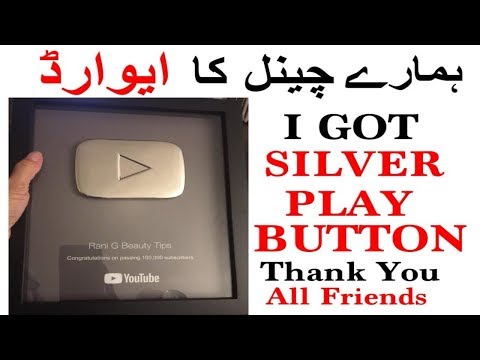
RANI G H & B TIPS SILVER PLAY BUTTON 🤗| Thank You So Much To All Subscriber By Rani G - Duration: 3:04.

Please SUBSCRIBE Rani G Health & Beauty Tips

For more infomation >> RANI G H & B TIPS SILVER PLAY BUTTON 🤗| Thank You So Much To All Subscriber By Rani G - Duration: 3:04.

-------------------------------------------

Awesome! Funny new born baby monkey playing with big boss | So happy baby monkey | Monkey Daily 122 - Duration: 6:36.

For more infomation >> Awesome! Funny new born baby monkey playing with big boss | So happy baby monkey | Monkey Daily 122 - Duration: 6:36.

-------------------------------------------

$2M in grants aims to find out why so many Texas moms die after giving birth - Duration: 2:11.

For more infomation >> $2M in grants aims to find out why so many Texas moms die after giving birth - Duration: 2:11.

-------------------------------------------

Sound Bite Hall of Fame: So Stoke - Duration: 1:51.

For more infomation >> Sound Bite Hall of Fame: So Stoke - Duration: 1:51.

-------------------------------------------

Should I Get A Real Estate License - If So... Why? - Duration: 8:58.

Kris Krohn here and today, we're talking about how to get a real estate license

and I've brought a realtor, a friend of mine,

Steven Miller, you've seen him before to talk about his license, how he got it,

pros and cons, should you get one, shouldn't you get one and everything

else you need to know.

We are back. I'm here with Steven Michael Miller and today we are talking

about how to get a real estate license. Many of you have been commenting and

asking and there's this idea that, hey if I get into real estate or if I'm going

to be an investor, do I need to have a license? Steven, let's just actually

start with some of the basics on, we'll get to how you get one but first of all,

what is a real estate license? - Yeah, a real estate license licenses you to be

able to buy and sell real estate for other people, to represent to somebody, in

other words, you're becoming an agent for that individual in that transaction but

the reality is, in order to invest in real estate, you don't have to be

licensed in anything. Some people think about getting their

mortgage license, some people think about doing their real estate license, maybe

some people want to get into the title aspects of that so they can do all the

title searches on their homes but to be a successful real estate investor, you

don't necessarily need any of those yourself. Now that being said, there are

some benefits, there can be some benefits to get licensed. I'm a licensed real

estate agent. At one point, Kris and I were both licensed mortgage or loan

officers so there could be some benefits because you can take advantage of some

of that commission that's more money in your pocket, that's more profitability

for you at rather than paying that to somebody else but you don't have to

necessarily. - Yeah, so look at this for a moment, when I'm out there in the real

estate world and I'm investing in online properties, I'm going to come across

properties that I want, I'm going to come across properties that I don't want. Real

estate is really a game of people more than property which means that when

you're dealing with people, you're going to run into people that also might want

help buying a property and if all of a sudden you're putting in a little extra

legwork and it can earn you several thousand dollar commission when that

house sells or if you want to represent someone in selling a house, we've always

said that, hey if you're going to be in the game a real estate, maximize across the

board wherever you can so for many of you, there's a couple of things that that

can mean. If you're transacting or plan on transacting a lot of real estate,

there likely could be a benefit from you of holding a license. Now Steven said it

really well, you cannot be paid on multiple licenses on a single

transaction so for example if I held every license, I couldn't be the

appraiser, the loan officer, the realtor and the title officer, that would be

illegal. I couldn't even play two of those roles

simultaneously. I could own multiple licenses but I can only use one per

transaction and I want to bring up a point about being a licensed realtor

or any other license. When Steven and I said we started

the loan officer game in the beginning, I got my lending license because I didn't

understand loans and I wanted to. The education was so valuable for my journey

but I would argue that it is many times more work for a lot less pay to be a

licensed loan officer than a licensed realtor and so if you do have to pick a

license, the reality is that, getting the realtor's license is something that

you can double dip on a lot more handsomely and a lot more easily than a

lot of the other licenses that are out there and available to you. - Yeah, so one

question that we've gotten is, will a real estate license make me wealthy and

the answer is, it could, it depends on what your focus is, if your focus is on

investing alone then the investing should be enough to make you wealthy but

if you want to get your license and have that be a a part-time gig or maybe even

a side full-time gig to start funding more of your real estate, you could do

that too and you can actually get a lot of wealth, I mean there are some super

super wealthy real estate agents and brokers in the world and that's

one way that you can do that. - Now it is important to understand though that

there's a difference between real estate as a job in real estate as an investment

so when you're licensed realtor, what you're doing is if you're one of

those big brokers out there that's making hundreds of thousands of dollars

a year, that's awesome but make sure that you do understand that you're not

investing and you're not an investor, in fact, when you don't work, you don't get

paid and so it's important to know that it's a job which means you're trading

dollar for hours. Doing realtor the right way, it can be a really lucrative

exchange, meaning it's not like you're trading ten dollars per hour, you can

literally exchange hundreds or in some cases, thousands of dollars per hour

which creates a really nice draw. On the other hand, it's important to, I want to

give you a word of caution, a lot of people think that having a real estate

license means that you're in real estate, that is true but also make sure you

don't confuse that with becoming an investor. Unfortunately, there are many

real estate agents out there that are so good at being realtors or so busy making

their money that way that they actually, they're so close to investing but they

don't actually ever get into it because it's easy to make an excuse that

I'm already in real estate. An investor is someone who has properties that are

paying them cash flow, paying them and that have equity that are growing for

them and there's a plan. Can you do both? The answer is absolutely. You absolutely can.

Now Steven, if someone wants to get a real estate license, what does that look

like in most scenarios? - Yeah, getting a real estate license is really simple. As

a matter of fact, you'll just want to probably jump online, there are several

different online schools that you can go to. If you jump online, you can find

some good local schools that you can go to and one of the requirements before

you can even get licensed is to go through a certain number of hours of

school of, it has to be a certified school with with the state, your

state will have to approve that so once you go through the schooling and you get

that certificate, you can then go in and take the test and.. - How many hours did it

take for you to get license? - It's 120 hours of school. - So it's 120 hours so if

you think about it for a minute, it's a pretty big commitment front and did it

cost money too? - It does cost money, several hundred dollars. It's

not crazy but once you pay that seven hundred dollars, you get the

education, you'll have to pay another fee to get your license. I don't have all the

numbers right off the top of my head, it's probably different in different

areas as well but I think for under a thousand dollars,

you can get your schooling, get licensed and depending on whether or not

you're going to become part of the MLS which is an extra fee a month - Multi lifting services -

yeah, thank you or you know, other things like that, there are some

sometimes different County resources that you may want to tap into and there

are little fees here and there for all of that so but the reality is,

if you want to become a licensed real estate agent, it's not that difficult.

Enroll in the school, take the course and then go take the test. - Now I would share

just two other things that I think will be very useful for you in this video.

First of all, there is one disadvantage to owning a license that we're really

aware of that doesn't have to be a big disadvantage but once you are licensed,

that must be disclosed in any transaction that you're ever a part of

what you're ever doing and there are times when as an investor, you might be

working with somebody for example, it could be a seller finance deal, you need

to disclose that you are also a realtor and that can be scary to some people, it

can also play with people in their head with fees, oh now I'm going to have to pay

you a certain amount when as an investor, you're, you know, so can you get around

that? Yes, you absolutely can, there's a posture to work around that but you need

to understand that there's a limitation in the fact that you do need to disclose

that when you're doing deals and I don't really see it being a true hinderment

of really getting in your way but it is something that you need to be aware of.

The last thing, Steven, is once someone has a license, the only way they can

really be useful with that license is they need to hang their license with a broker.

There's a lot of brokers out there, there's some that do splits like a

70/30 split and there's some that say, hey you know we'll charge you this fee

and then you make all the rest of the money, there's a lot of different

approaches to brokerages. Do you have any advice on that?

- Absolutely. I would say work with a broker who's going to benefit you the

most. Some of you may say, hey I know a lot about real estate, I'm just getting

my license because I want to earn that extra money. You may want to go

with a very hands-off type of broker who maybe that person who doesn't provide a

lot of training but gives you a large large split, great. On the other hand,

you're kind of new to this and you want to learn the ropes and learn how to

market to grow your real estate business, your realtor business then you

may want to choose a broker who may take a little bit more in the beginning but

it's going to offer you a lot of training, a lot of hand-holding so it just really

depends on your specific needs. This is the final idea that I want to share

with you. Unfortunately, there's a perception out there where some people

truly do confuse being an investor with being a realtor. At the end of the day, I

want to make sure that it's really clear. This video of how to get your real

estate license is all about how you get a real estate license. Understand it is

not a requirement to become an investor, in fact, you can click the link up here

and you can actually jump headfirst into the world of investing

and you don't need any license, you'll want our training because we'll actually

show you the biggest shortcut and condense years of experience in hundreds

of millions on real estate and really compacted into a minimalistic training

that will just get you doing real estate and that's one approach, being a licensed

realtor is a different approach and you absolutely can combine them together.

I hope you enjoyed today's video. Please be sure to subscribe,

ring the bells so that we can notify you more about tomorrow's video and the next day

and any other videos that can help you on your journey of wealth in real estate.

For more infomation >> Should I Get A Real Estate License - If So... Why? - Duration: 8:58.

-------------------------------------------

Die Tricks von Fake News-Machern durchschauen Konsequenzen für die Gesellschaft - so geht MEDIEN - Duration: 0:16.

For more infomation >> Die Tricks von Fake News-Machern durchschauen Konsequenzen für die Gesellschaft - so geht MEDIEN - Duration: 0:16.

-------------------------------------------

So schlecht sind Kindergartensteuern für Familien! - Duration: 0:58.

For more infomation >> So schlecht sind Kindergartensteuern für Familien! - Duration: 0:58.
-------------------------------------------

2018 Flu Season: Why This Year's Flu Is So Bad - Duration: 3:53.

Welcome to Dr. David Eifrig's Health & Wealth Bulletin.

This is Weekly Update.

Right now, we're in the midst of one of the worst flu seasons on record.

In fact, about 31.5 cases out of every 100,000 hospitalizations are because of the flu.

That's one of the highest numbers that we've seen.

Unfortunately, we still have about 11 to 13 weeks left, meaning that this flu season can

get even worse.

Already, we have 30 children who have died of the flu in the U.S. and the number of adults

is still untold.

We won't really know until the end of flu season.

Now the reason the flu is so dangerous is because of how quickly it mutates.

So the flu virus comes in one of three types.

There's type A, type B, and type C. Type A is the most dangerous – that's the one that's

responsible for so many epidemics like we're seeing right now.

So that's the kind we're going to focus on today.

Now the flu virus gets its name from two proteins on the outer shell of its envelope.

There's the H protein and the N protein.

The H protein, hemagglutinin, comes in 18 different types.

The N protein, neuraminidase, comes in 11 different types.

Now these two proteins are important because they both help determine how infectious the

flu is and how quickly it can spread once it's inside your body.

The combinations of these two are why we get different strains like H1N1 or H3N2, which

is what we're seeing right now.

Now H3N2 is one of the most dangerous types out there because of how quickly it spreads

and how many complications it can bring.

Now this might also be why we're seeing such low effective rates for the vaccine.

Here in the U.S. they're estimating about a 30% effectiveness, but in places like Australia,

it's only about 10% effective.

Now, one thing to keep in mind is: don't let this dissuade you from really getting your

flu shot every year.

In fact, one study out of the Uniformed Services University of the Health Sciences demonstrated

that getting your flu shot actually lessens the severity of your symptoms.

They looked at a group of folks who had the flu, about 72% of whom were vaccinated.

Those who'd been vaccinated had a far lower chance of having a fever, they had fewer upper

respiratory problems, and overall their symptoms were far less severe.

This is very important because we want to make sure we get as much protection as we

can, even if we do get the flu.

Another point to keep in mind here is that about 80 to 85% of all children every year

who die from the flu were unvaccinated, so it's especially critical to get your flu shot

if you're a child, if you're an adult over 65, or if you're someone with a compromised

immune system because you certainly need that help fighting off the flu.

So if you're having symptoms of the flu, it's important to know if you have the flu or simply

another cold.

Remember, the cold is also a virus, so it's very similar in the way it presents.

In fact, both colds and flu give you a cough, sore throat, runny nose, body aches, headaches,

fatigue, sometimes even fever.

But it's important to remember that colds usually come with a stuffy and a runny nose

and they come over a period of time – you can feel yourself getting sick.

With the flu, the key is a very rapid onset of symptoms.

If this is the case for you, you certainly want to go to your doctor and talk to them,

especially if you're in one of these immune compromised groups.

If that's the case, your doctor may recommend antiviral medications.

These are special medicines designed to fight the flu but they're only really effective

if given within the first 48 hours.

That's why keeping an eye on your symptoms and getting help immediately is really important.

That's it for now.

Keep your questions and comments coming to our feedback line.

Don't forget to like, share, and subscribe, and we'll see you next week.

For more infomation >> 2018 Flu Season: Why This Year's Flu Is So Bad - Duration: 3:53.

-------------------------------------------

Charlène von Monaco: So sehr leidet sie wirklich! - Duration: 5:23.

For more infomation >> Charlène von Monaco: So sehr leidet sie wirklich! - Duration: 5:23.

-------------------------------------------

Nachrichtenfaktoren: Die Quellenauswahl - So geht MEDIEN - Duration: 0:50.

For more infomation >> Nachrichtenfaktoren: Die Quellenauswahl - So geht MEDIEN - Duration: 0:50.

-------------------------------------------

Bommels GZSZ-Tod: So rührend war der Dreh für Ulrike Frank - Duration: 1:05.

For more infomation >> Bommels GZSZ-Tod: So rührend war der Dreh für Ulrike Frank - Duration: 1:05.

-------------------------------------------

Here's why restoring power in Puerto Rico is taking so long - Duration: 7:33.

JUDY WOODRUFF: It's hard to fully comprehend, but more than four months since hurricanes

swept through the Caribbean, about half of Puerto Ricans remain without electricity.

This week, Governor Ricardo Rossello announced the island's public energy monopoly would

be sold off to private companies following a series of scandals.

In the first of two reports from Puerto Rico, special correspondent Monica Villamizar looks

at what's behind the delay in restoring power and how people are coping.

MONICA VILLAMIZAR: When Hurricane Maria struck in September, fires broke out and victims

had to run to the station to inform firefighter Ronald Vega and his colleagues.

There was no way to dial 911.

This fire station in the eastern town of Naguabo is now functioning normally.

But at Ronald Vega's home nearby, there is no electricity.

He uses a generator at night and relies on emergency food aid.

The signs of water damage still loom above his head.

RONALD VEGA, Firefighter (through translator): It's not easy.

It's such a tough situation.

I'm paying at least $15 a day for the fuel of my generator during the week.

That's every day.

MONICA VILLAMIZAR: As a firefighter, Vega makes less than $20,000 a year.

Before the storm he was already supplementing his income with part-time work at Walgreens.

Four months after the storm, about 450,000 of the 1.5 million electricity customers are

without service.

Blackouts occur regularly our hours at a time, even in San Juan.

Outside the capital, destruction remains.

In Salinas, home to the island's largest power plant, Barber Julio Ortiz set up shop at a

ruined gas station.

It took him three months to find an inverter to connect his razors to the car battery.

MAN (through translator) People have to survive one way or another.

I have to make it happen somehow because, you know, money doesn't grow on trees.

MONICA VILLAMIZAR: The response here remains an emergency.

The U.S. Army Corps of Engineers coordinates repairs by private contractors using dollars

from FEMA, the Federal Emergency Management Agency.

WOMAN: We're standing at the lay-down yard where all of our large items come into.

MONICA VILLAMIZAR: The Army Corps oversees materials distributed across the island, but

under the federal Stafford Act, FEMA is only allowed to restore infrastructure exactly

as it was before a disaster.

In some cases, materials in Puerto Rico were so outdated that the Corps had to get them

made especially for the island, furthering delays.

COL.

JOHN LLOYD, Army Corps of Engineers: It really doesn't allow us to do more resilient or hardening

work that made that Puerto Rico's grid definitely needs.

MONICA VILLAMIZAR: Colonel John Lloyd directs the Army Corps' operation from the headquarters

of the electricity utility.

What's the point of restoring it to something old and essentially in bad shape?

COL.

JOHN LLOYD: The work that we are doing does -- it brings it up to code, and in many cases

the grid wasn't to current code.

MONICA VILLAMIZAR: And when do you think everybody will have power again?

COL.

JOHN LLOYD: We will slowly get more customers online.

I think by the middle of March, end of March, we're going to see the majority of customers

with power.

MONICA VILLAMIZAR: Many people have accused Puerto Rico's only electric utility company,

PREPA, of being corrupt and wasteful.

Before the storm, PREPA was bankrupt, and it saved money by cutting down on important

maintenance.

After the storm, PREPA contracted Whitefish, a small, Montana-based firm, for repairs it

could not complete.

The contract was canceled, but PREPA still has to pay Whitefish more than $100 million

for work done.

And then this week, the Puerto Rican governor announced that PREPA will be privatized over

the next 18 months.

GOV.

RICARDO ROSSELLO, Puerto Rico (through translator): The process will begin for PREPA assets to

be sold to companies who will transform the generation system into a modern, efficient,

and less expensive one for the people.

MONICA VILLAMIZAR: The privatization is not expected to affect the repair schedule.

About 80 percent of electrical infrastructure was destroyed.

PREPA told us that restoring power everyone on the island, not just the majority, is expected

to take at least until May, eight months after Hurricane Maria.

Houses across the countryside are lined with blue tarp on their roofs.

But not everyone is waiting for outside help to move forward with repairs.

ARTURO MASSOL DEYA, Casa Pueblo: We don't depend upon the grid to supply the needs of

Casa Pueblo.

MONICA VILLAMIZAR: Arturo Massol Deya is the head of Casa Pueblo, an environmental organization

in Adjuntas.

This local community center has been running on solar energy since 1999.

The sun powers everything, from industrial coffee grinders to medicine refrigerators,

as well as radio station.

ARTURO MASSOL DEYA: Lighting was a critical thing.

And it was a way to teach people how inexpensive, easy it is to embrace renewable energy sources

like the sun, in which you are less vulnerable, because the capture of the energy and the

utilization of the energy is at the point of consumption.

MONICA VILLAMIZAR: Casa Pueblo is technically still connected to the grid.

But it creates so much power that it can send it back into the system.

The Puerto Rican government still hasn't approved regulations for people to provide power to

the grid with solar.

In addition to the costs of infrastructure, that's one more barrier to making alternative

energy widespread.

The government does plan to increase renewable power from only a small amount to 30 percent

of the island's energy, so it can be more prepared for the next hurricane.

This place became a very important power source for the entire community after the hurricane.

People were coming here to charge their phones and get solar lamps and refrigerators.

And the radio station never stopped broadcasting, because it runs on solar power.

It's a community station where people call in to request their favorite salsa songs and

make dedications to friends and family.

In the hills around his town, Arturo has installed solar power systems to connect vulnerable

people isolated from the power network.

Jonathan is disabled, living with his grandmother, Luz Leida Plaza.

With solar, they have lights and power for their phones and a tiny fridge for medicine.

The same system powers a neighbor's dialysis machine.

LUZ LEIDA PLAZA, Adjuntas (through translator): Before they had a solar system, my neighbor

told me he had to connect his mother's machine to a car battery all night.

MONICA VILLAMIZAR: It's a familiar story to Ronald Vega.

RONALD VEGA (through translator): In some places, they are fighting, fighting to get

electricity.

People in many villages say they feel that they have simply been forgotten.

And that's because, in many places, they are still without power and lights, and it's been

more than 116 days.

MONICA VILLAMIZAR: And like Casa Pueblo, his fire station is now prepared.

Thanks to a solar power system brought to the island by Las Vegas firefighters, they

are strong enough to weather the next hurricane.

For the "PBS NewsHour," I'm Monica Villamizar in Puerto Rico.

JUDY WOODRUFF: And in the coming days, we will continue our series After the Storms

with additional reports from Puerto Rico and from Texas.

Không có nhận xét nào:

Đăng nhận xét