Will artificial intelligence ever become advanced enough to take over the world?
We've seen this concept in many movies – when humans create a piece of technology that's
just a little too intelligent and independent that we can no longer control them.
This scenario of machines and Artificial Intelligence taking over the world may seem far-fetched
and the premise of a satirical sci-fi movie, the ever-growing rate at which technological
innovations and breakthroughs are occuring should encourage us to consider the possibility
that our reliance on AI may prove to be our undoing as a civilisation sooner or later.
If robots did take over the world, it wouldn't happen overnight, rather, gradually shaping
and changing the role that it played in our lives, slowly but significantly changing the
way we interacted with our world.
Sound familiar?
Stephen Hawking once said, "The development of full artificial intelligence could spell
the end of the human race...It would take off on its own, and re-design itself at an
ever increasing rate.
Humans, who are limited by slow biological evolution, couldn't compete, and would be
superseded."
In this video, we're going to talk about some of the most advanced pieces of AI that
currently exist, and how this technology could change our world in the very near future.
-- The word "robot" was first popularized
by Karel Čapek, a famous Czech sci-fi writer from the early 20th century.
Since then, we've been constantly pushing the boundaries of what machines are capable
of But according to Arend Hintz, a professor of integrative biology and computer sciences,
and engineering at Michigan State University, the rise of AI truly began in the 1990s, in
the form of the IBM chess-playing computer, Deep Blue, that managed to beat Garry Kasparov,
the world chess champion at the time.
But at its core, this machine was still pretty basic.
Flash forward 20 years, and now we have the humanoid robot, known as Sophia, that can
not only hold conversations, possess facial expressions and recognize individuals, but
has actually gained citizenship in Saudi Arabia.
One of the most advanced robots is ASIMO (or Advanced Step in Innovative Mobility), created
by Honda in the year 2000.
This bipedal humanoid robot can recognize moving objects, distinguish sounds, respond
to questions, and travel autonomously.
Part of what makes us human is our ability to form memories, learn from experiences,
and adapt our behaviours based that.
This is basically what modern AI aims to do.
One application would be self-driving cars that are able to gather and interpret information
from observing other cars on the street.
In this new age of artificial intelligence, experts and researchers are trying to integrate
something called the 'theory of mind' into machines, so that they not only form
representations of the world, but can recognize beliefs and emotions in other entities, allowing
them to predict behaviour.
So, where are we at now?
In May of 2017, Google announced the AutoML project, which involves AI designed to create
other AI, possibly even more efficiently than human engineers.
Wait...robots that can create more of themselves?
Now that does sound like a sci-fi novel.
But, could a robot takeover really happen?
While fantasies of being wiped out by androids may be something plaguing our imaginations,
there are some other hurdles to overcome before any Hollywood-type scenario ever occurred.
One of our biggest worries is that robots may eventually render human labour obsolete
. In 2015, when news emerged that about 15 million jobs in the United Kingdom would be
automated within a couple of decades, people were at a panic, fearing the loss of their
jobs.
However, some are more optimistic, and believe that we just need to change our relationship
with AI and make use of our resources in the best way possible.
Mikhail Naumov, co-founder and Chief Strategy officer of DigitalGenius believes that AI
is best used when teamed up with people.
He says that AI is simply a tool for the customer service reps, similar to how an accountant
uses a calculator or a banker uses a spreadsheet.
But for many of us technology has already changed from something that is "nice to
have" to something that we fully depend on to survive.
Another common worry is that without fully understanding how machine learning occurs.
This is referred to as the "black box" of AI, where the algorithms are so complicated
that even experts can't seem to figure out what's happening after the information goes
in.
Without truly knowing what's going on and how robots learn from new information, some
fear that one day technology might just slip out of our control.
It's true that technological advancement has brought many benefits to our lives, but
with the amount of power that it holds, we must at least note the importance of AI safety
and research.
Elon Musk, founder of companies like SpaceX and Tesla, is a well-known advocate for the
regulation of artificial intelligence, claiming that it is a fundamental risk to the existence
of human civilization and that governments need to have a better understanding of this
technology in order to fully comprehend the damage that it could do.
So, what do you think?
Is this something that we should be concerned about?
Or should we just embrace the convenience and advancement
that AI brings to us?


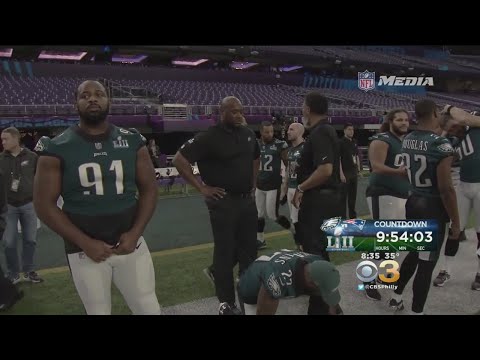 For more infomation >> Eagles Nation Confident Team Will Bring Home Championship - Duration: 2:30.
 For more infomation >> 2 Idiots Start A Space Program, Will It All End In Disaster! Kerbal Space Program #1 - Duration: 2:42:13.
  For more infomation >> BREAKING! Trump Just Made an URGENT Announcement That Will WAKE YOU THE HELL UP! - Duration: 8:27.
 For more infomation >> GERMAN HABITS YOU'LL PICK UP (AGAINST YOUR WILL) IN GERMANY !! - Duration: 8:52.
 For more infomation >> Sing along "Get Ready" this isn't how it will look in the movie - Duration: 1:26.

 For more infomation >> [Maharashtra News] Maharashtra will become the first transit welfare board / THE NEWS INDIA - Duration: 1:26.
  For more infomation >> 20 గెటప్స్ లో కనిపించనున్న బాలక్రిష్ణ|Balakrishna-will-be-sporting-more-than-20-getups-for-ntr|SCU - Duration: 0:56.
 For more infomation >> SLIME/ Mi PRIMERA VEZ!!!/ Lo conseguiré?/ SLIME/My FIRST TIME / Will I get it?. - Duration: 8:51.


Không có nhận xét nào:
Đăng nhận xét