Well, hello everybody! Welcome back to another episode of Anabaptist Perspectives!
I'm with Benjamin Good. We're at SMBI.
This is the choir room here at Sharon Mennonite Bible Institute.
You would have conducted the choir here for how many years?
Well, I'm here full time since 2012. It was part time before then.
So, a couple of years then definitely.
I remember standing about right there
under you teaching us.
That's where the bass often go.
A lot of good memories there.
You've had a lot of experience in a lot of different choirs.
Can you tell us first of all a little bit about
yourself and your experiences here at SMBI?
Well I grew up in a family
that sang together quite a lot, so I've been singing all my life.
Had my first experience in conducting here at SMBI.
I took the conducting class.
So, besides being involved in the choir here, I
also teach music classes, both music theory and music theology, and some Bible classes as well.
Something that our circles are really well known for. We have a lot of choirs, and they're on YouTube.
They're all over the place. We have tons of CD's.
It seems like every time you turn around, another church is starting a choir.
Obviously, we really stress a cappella music (music without instruments). That's historically been something that
the Mennonites have. To be blunt,
why do we have so many choirs? What is it about our culture that produces so many choirs?
Well, singing is fun. Singing is a lot of fun.
That's why you joined the choir probably.
It's just something that people want to do, and in fact
I think most of the choirs are formed just because of the demand for them.
People enjoy singing. People enjoy listening to choirs. People enjoy singing in choirs.
Supply-and-demand.
One time we were on tour (the SMBI choir),
we toured up into Canada. Crossing the Canadian border, one of the officials asked one of the students,
"What are you doing on this tour?"
"It's a singing tour."
The official asked that student, "How much do they pay you to be a part of this tour?"
And the student said, "No, I pay to be a part of the tour." The official said, "Strange."
We love to sing. People want to sing.
How is it that that is so embedded into our culture then of doing church choirs and a youth group choir?
We have so many of them. Obviously in our congregations, singing
together (a cappella), how did that become such a part of our culture?
Singing has always been important to the christian church. The first century of christians after
Jesus sang a lot. They believed in the power of
congregational singing. We find that both in the Bible and in extra-biblical sources as well.
Singing is worship, but it's more than that. There's a lot entailed in that. Singing is teaching the truth.
Singing is a way of evangelizing and witness.
Singing is a way to join people together.
So, there's a lot of power in music, specifically in singing.
There's a lot of power that we as a church understand,
and we want to tap into that.
So, you've kind of described a little bit about what attracts us to choirs.
What is it
theologically that choirs and a cappella music
does for a group? I guess I'm trying to get a little bit deeper.
What is it about our belief of the Bible that
brings out this in us?
God asks us to sing. If singing were something that would be difficult to do,
that would be one thing.
But God asks us to sing, and we want to praise Him through singing. So that flows out of our hearts and our lives
in both congregational singing (in worship scenarios), and also in performance. We want to sing to glorify our God.
I know other groups have an emphasis on choirs and singing,
but I'm gonna guess not nearly as much as the Mennonites. For how small of a group
we are, how much music we produce is very disproportionate.
Why haven't other church groups picked this up?
I believe it's because
we focus on a cappella singing,
where many Christian groups are okay with instruments even in their worship services.
The Mennonites, the anabaptists in general, would
prefer, we would actually strongly uphold
a cappella singing in our worship. Because of that,
people sing. They learn to sing in parts from little up. So choirs are a natural extension of that.
Youth choirs are a big thing.
It's a way of involving the young people in something healthy and having them
get around and see other youth groups and to see what God is doing in other churches
by doing a choir tour.
It's so baked into the culture from little up then.
Oh yes. Oh definitely.
Talk a little bit about the history of Mennonite choirs. Is this a new thing?
It seems like there's more than there ever were. Is this something that's been around for a long time?
Good question! Choirs have not always been in our churches.
So back a little bit to the first century:
singing was a big part of the early church.
When the church became a state entity,
choirs were the ones who
produced all the music in the church. You would go as a lay person and just sit in the pew and not make a sound.
For hundreds of years, that was the case. Then when the Reformation came along,
many of the reformers (including some of the leading anabaptists)
said, "We want to get the congregation back involved again in the music," (in the singing, I should say).
So they pushed it hard that this should be a congregational activity and
strong participation. They may have
reacted just a bit to the lack of congregational singing pre-reformation.
It went for a number of years. In fact, we have very little or no record of choirs in the anabaptist circles
until the 20th century or more (maybe soon before).
At that point, you have choirs beginning to flourish
(actually, late twentieth-century). Prior to that,
for many years in the conservative Mennonite and Amish circles, you had youth singings.
It was very common on a Sunday evening to have a youth singing. Then what's the difference between a singing and a choir?
Well, choirs are built around the idea that you're rehearsing a set of songs to
perform to an audience at one point.
So, choirs formed out of the singing at some point.
So, really this is a pretty new development isn't it?
Yes.
I believe that we have a better mix,
maybe the best mix, the church (the christian church) has ever had in keeping strong
congregational singing, as well as having choirs that
supplement that occasionally
and do some touring.
Well, because that's the flip side. The choirs,
at least from my experience, in Mennonite circles have not in any way taken the place of
congregational singing.
Right. We're concerned about that. We want that to stay that way.
That was a question I had I was gonna
ask is, has that been a case where choirs are?
No, it doesn't seem to be that way.
Even those of us who are involved deeply in choirs, should care very much about
your typical local worship services that happen
with congregational singing as a major part of that.
We don't want that ever to go away.
There's value in both.
Oh yes.
What is the single biggest positive outcome
you've seen from the anabaptist tradition
or culture as it were of a cappella music?
It's the strong congregational participation.
So when you have pre-reformation,
the leaders leading worship, the choir singing, the lay people (the congregation) just observed worship.
Congregational involvement is so key to what we do.
It's what we believe.
A cappella singing depends on everyone knowing how to sing
and wanting to sing along and so, strong participation from the congregation.
The other thing that you have with a cappella singing that is
undermined a bit with instrumental music in worship is
the focus on the lyrics, focus on the truth of the lyrics. The Gospel message needs the clarity of
text, of the lyrics. So while we enjoy the beautiful music, and while the beautiful music draws our
hearts and minds toward God, the text
drives it home. That's where everything is focused.
So, worship then becomes something that's
more than something that we see performed. It's something everyone's a part of in our churches.
Definitely.
That's the other thing too. Not everyone can play instruments either.
Can you imagine a church service of that?
I think in the end, choirs strengthen
the congregational singing by teaching people how to sing. They teach congregations new songs.
They promote the joy of singing, of vocal music.
It's a great activity for young people to do.
On tour they can go see other places
where God is working. His church is flourishing. So choirs are a good thing that
strengthens the church, and that in the end strengthens congregational music.
So you would definitely recommend that people go out and join a choir?
Oh, yes.
That's pretty cool! How many choirs have you sung in then?
That's a tough question. Quite a few.
Very good.
Thank you, Benjamin, for being on this episode and sharing your thoughts. That's some good stuff to think about.
For the audience out there, go out there and look up some of the choir music from our different choirs.
Oasis, SMBI and different of the Bible schools that have them. It's worth doing. It really is worth doing.
Thank you all for watching, and if you like what you see here, let us know.
If you have some input,
comment it, and we'll discuss it. We'll maybe do another episode if you have some ideas.
Thanks for watching! We put out new videos each week.
Be sure to come back, and we'll see you guys in the next one.
 For more infomation >> FIFA18 TOTW 24 So gut sind sie wirklich?! - Duration: 34:47.
 For more infomation >> [ENG SUB] Radio Romance EP. 11 Preview | 라디오 로맨스 | Kim So Hyun & Yoon Doo Joon - Duration: 1:29.



 For more infomation >> THIS WAS SO COLD - Duration: 6:16.


 For more infomation >> So entfernen Sie braune Flecken, unregelmäßigen Hauttonus und Hyperpigmentierung - Duration: 6:12.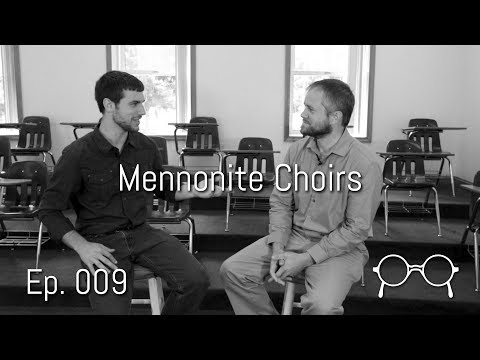

 For more infomation >> Christian Ehring: BILD - so geht Journalismus | extra 3 | NDR - Duration: 2:15.
  For more infomation >> Wow-Body: So hot ist Kylie Jenner 1 Monat nach der Geburt! - Duration: 0:49.

Không có nhận xét nào:
Đăng nhận xét