Chủ Nhật, 25 tháng 3, 2018

Youtube daily will Mar 25 2018

Chapter 8 1 And it was in the night that Abram was born,

that all the servants of Terah, and all the wise men of Nimrod, and his conjurors came

and ate and drank in the house of Terah, and they rejoiced with him on that night.

2 And when all the wise men and conjurors went out from the house of Terah, they lifted

up their eyes toward heaven that night to look at the stars, and they saw, and behold

one very large star came from the east and ran in the heavens, and he swallowed up the

four stars from the four sides of the heavens.

3 And all the wise men of the king and his conjurors were astonished at the sight, and

the sages understood this matter, and they knew its import.

4 And they said to each other, This only betokens the child that has been born to Terah this

night, who will grow up and be fruitful, and multiply, and possess all the earth, he and

his children for ever, and he and his seed will slay great kings, and inherit their lands.

5 And the wise men and conjurors went home that night, and in the morning all these wise

men and conjurors rose up early, and assembled in an appointed house.

6 And they spoke and said to each other, Behold the sight that we saw last night is hidden

from the king, it has not been made known to him.

7 And should this thing get known to the king in the latter days, he will say to us, Why

have you concealed this matter from me, and then we shall all suffer death; therefore,

now let us go and tell the king the sight which we saw, and the interpretation thereof,

and we shall then remain clear.

8 And they did so, and they all went to the king and bowed down to him to the ground,

and they said, May the king live, may the king live.

9 We heard that a son was born to Terah the son of Nahor, the prince of thy host, and

we yesternight came to his house, and we ate and drank and rejoiced with him that night.

10 And when thy servants went out from the house of Terah, to go to our respective homes

to abide there for the night, we lifted up our eyes to heaven, and we saw a great star

coming from the east, and the same star ran with great speed, and swallowed up four great

stars, from the four sides of the heavens.

11 And thy servants were astonished at the sight which we saw, and were greatly terrified,

and we made our judgment upon the sight, and knew by our wisdom the proper interpretation

thereof, that this thing applies to the child that is born to Terah, who will grow up and

multiply greatly, and become powerful, and kill all the kings of the earth, and inherit

all their lands, he and his seed forever.

12 And now our lord and king, behold we have truly acquainted thee with what we have seen

concerning this child.

13 If it seemeth good to the king to give his father value for this child, we will slay

him before he shall grow up and increase in the land, and his evil increase against us,

that we and our children perish through his evil.

14 And the king heard their words and they seemed good in his sight, and he sent and

called for Terah, and Terah came before the king.

15 And the king said to Terah, I have been told that a son was yesternight born to thee,

and after this manner was observed in the heavens at his birth.

16 And now therefore give me the child, that we may slay him before his evil springs up

against us, and I will give thee for his value, thy house full of silver and gold.

17 And Terah answered the king and said to him: My Lord and king, I have heard thy words,

and thy servant shall do all that his king desireth.

18 But my lord and king, I will tell thee what happened to me yesternight, that I may

see what advice the king will give his servant, and then I will answer the king upon what

he has just spoken; and the king said, Speak.

19 And Terah said to the king, Ayon, son of Mored, came to me yesternight, saying,

20 Give unto me the great and beautiful horse that the king gave thee, and I will give thee

silver and gold, and straw and provender for its value; and I said to him, Wait till I

see the king concerning thy words, and behold whatever the king saith, that will I do.

21 And now my lord and king, behold I have made this thing known to thee, and the advice

which my king will give unto his servant, that will I follow.

22 And the king heard the words of Terah, and his anger was kindled and he considered

him in the light of a fool.

23 And the king answered Terah, and he said to him, Art thou so silly, ignorant, or deficient

in understanding, to do this thing, to give thy beautiful horse for silver and gold or

even for straw and provender?

24 Art thou so short of silver and gold, that thou shouldst do this thing, because thou

canst not obtain straw and provender to feed thy horse? and what is silver and gold to

thee, or straw and provender, that thou shouldst give away that fine horse which I gave thee,

like which there is none to be had on the whole earth?

25 And the king left off speaking, and Terah answered the king, saying, Like unto this

has the king spoken to his servant;

26 I beseech thee, my lord and king, what is this which thou didst say unto me, saying,

Give thy son that we may slay him, and I will give thee silver and gold for his value; what

shall I do with silver and gold after the death of my son? who shall inherit me?

surely then at my death, the silver and gold will return to my king who gave it.

27 And when the king heard the words of Terah, and the parable which he brought concerning

the king, it grieved him greatly and he was vexed at this thing, and his anger burned

within him.

28 And Terah saw that the anger of the king was kindled against him, and he answered the

king, saying, All that I have is in the king's power; whatever the king desireth to do to

his servant, that let him do, yea, even my son, he is in the king's power, without value

in exchange, he and his two brothers that are older than he.

29 And the king said to Terah, No, but I will purchase thy younger son for a price.

30 And Terah answered the king, saying, I beseech thee my lord and king to let thy servant

speak a word before thee, and let the king hear the word of his servant, and Terah said,

Let my king give me three days' time till I consider this matter within myself, and

consult with my family concerning the words of my king; and he pressed the king greatly

to agree to this.

31 And the king hearkened to Terah, and he did so and he gave him three days' time, and

Terah went out from the king's presence, and he came home to his family and spoke to them

all the words of the king; and the people were greatly afraid.

32 And it was in the third day that the king sent to Terah, saying, Send me thy son for

a price as I spoke to thee; and shouldst thou not do this, I will send and slay all thou

hast in thy house, so that thou shalt not even have a dog remaining.

33 And Terah hastened, (as the thing was urgent from the king), and he took a child from one

of his servants, which his handmaid had born to him that day, and Terah brought the child

to the king and received value for him.

34 And the Lord was with Terah in this matter, that Nimrod might not cause Abram's death,

and the king took the child from Terah and with all his might dashed his head to the

ground, for he thought it had been Abram; and this was concealed from him from that

day, and it was forgotten by the king, as it was the will of Providence not to suffer

Abram's death.

35 And Terah took Abram his son secretly, together with his mother and nurse, and he

concealed them in a cave, and he brought them their provisions monthly.

36 And the Lord was with Abram in the cave and he grew up, and Abram was in the cave

ten years, and the king and his princes, soothsayers and sages, thought that the king had killed

Abram.

For more infomation >> Jasher 08 Wise Men Foretell what Abram will do to Nimrod's Kingdom/seek his death/Hid in cave 10 Yrs - Duration: 7:48.

-------------------------------------------

How to use Will in English Grammar in Hindi | Will आसानी से सीखे | Future Simple - Duration: 7:16.

Doer = Subject, TW = Helping Verb, Ac = Main Verb

Ac = Cook, Obj. = Food

Ac = Clean, Article = The, Obj. = Room

Ac = Watch, Obj. = Match

Ac = Jump, Article = The, Obj. = Wall

For more infomation >> How to use Will in English Grammar in Hindi | Will आसानी से सीखे | Future Simple - Duration: 7:16.

-------------------------------------------

7 FOTOGRAFÍAS QUE TE HARÁN CREER EN FANTASMAS - Duration: 7:04.

For more infomation >> 7 FOTOGRAFÍAS QUE TE HARÁN CREER EN FANTASMAS - Duration: 7:04.

-------------------------------------------

PSL 4 Complete League Matches Will Be Played in Pakistan | Branded Shehzad - Duration: 1:12.

Najam Sethi says half of PSL 4 matches will be played in Pakistan

Sethi said, "You should trust me. I do what I say. Have finished one good news and am now giving the second".

Sethi said Lahore and Karachi have a green light in terms of hosting PSL matches and now "we will make stadiums in Peshawar and Islamabad

The PCB chief said he wants to hold double weekend matches next year, explaining that there will be games in UAE on Thursday and Friday and in Pakistan on Saturday and Sunday.

For more infomation >> PSL 4 Complete League Matches Will Be Played in Pakistan | Branded Shehzad - Duration: 1:12.

-------------------------------------------

World War 3: China issues HARROWING military warning that WAR preparations WILL NOT STOP - DAILYNEWS - Duration: 4:57.

World War 3: China issues HARROWING military warning that WAR preparations WILL NOT STOP

CHINA is preparing for World War 3 after warning extensive military drills that frighten neighbours

will not be stopped because they are a "rehearsal for future conflict" which holds great importance

in "winning battles", the populous East Asian state declared.

The Communist nation has held another round of drills in the disputed South China Sea

and the Western Pacific after passing by Japan's southern islands, the air force said on Sunday,

calling such exercises the best preparation for war.

China is in the midst of an ambitious military modernisation programme overseen by President

Xi Jinping with a heavy focus on its air force and navy, from building stealth fighters to

adding aircraft carriers.

President Xi insists his nation has no hostile intent, but its sabre-rattling in the busy

South China Sea waterway, and around Taiwan, has touched a nerve in the region and in Washington.

In a statement, the air force said H-6K bombers and Su-30 and Su-35 fighters, among other

aircraft, carried out combat patrols over the South China Sea and exercises in the Western

Pacific after passing over the Miyako Strait, which lies between two southern Japanese islands.

China said: "Air Force exercises are rehearsals for future wars and are the most direct preparation

for combat."

It did not say when the exercises took place nor specify the parts of the South China Sea

or the Western Pacific.

In a "freedom of navigation" operation on Friday, a US Navy destroyer came within 12

nautical miles of an artificial island China has built in the South China Sea, provoking

condemnation from China, which claims most of the strategic waterway.

Sending Su-35 fighters over the South China Sea aims to help increase the air force's

ability to fight far out at sea, the air force said in the statement on its microblog.

Flying across the Miyako Strait, which also sits to the northeast of the self-ruled island

of Taiwan that China claims as its own, accorded with international law and practice.

The more exercises China practices far from its shores the better it will be positioned

as "an important force for managing and controlling crises, containing war and winning battles",

it added.

Beijing was furious after US President Donald Trump approved legislation last week that

encourages the United States to send senior officials to Taiwan to meet Taiwanese counterparts.

The atmosphere in Beijing began to get heated after US Deputy Assistant Secretary of State,

Alex Wong, visited Taipei on Tuesday.

Mr Wong became the first senior State Department official to visit Taiwan since Mr Trump came

into power, and since Washington approved the Taiwan Travel Act, which has already worsened

ties and brought new pressures to US-China relations.

Mr Wong said in Taipei on Wednesday that the United States' commitment to Taiwan has

never been stronger and that the island is an inspiration to the remaining regions of

the Indo-Pacific.

China claims self-ruled Taiwan as its own and considers it a wayward province.

And Chinese President Xi Jinping said on Tuesday that Taiwan would face the "punishment of

history" if it were to make any attempts to separate.

The Global Times said in an editorial that China had to "strike back against the law.

It said: "China can pressure the US in other areas of bilateral cooperation: for example,

the Korean Peninsula issue and Iran nuclear issue.

"China can also set itself against the US in international organisations such as the

UN."

The paper, which is published by the ruling Communist Party's official People's Daily

added: "The mainland must also prepare itself for a direct military clash in the Taiwan

Straits.

"It needs to make clear that escalation of US-Taiwan official exchanges will bring

serious consequences to Taiwan.

"This newspaper has suggested that the mainland can send military planes and warships across

the Taiwan Straits middle line.

This can be implemented gradually depending on the cross-Straits situation."

For more infomation >> World War 3: China issues HARROWING military warning that WAR preparations WILL NOT STOP - DAILYNEWS - Duration: 4:57.

-------------------------------------------

SIMPLEST WAY TO LOSE WEIGHT /ONE TIP THAT WILL MAKE YOU THIN FOR LIFETIME.URDU/HINDI (English sub) - Duration: 4:01.
For more infomation >> SIMPLEST WAY TO LOSE WEIGHT /ONE TIP THAT WILL MAKE YOU THIN FOR LIFETIME.URDU/HINDI (English sub) - Duration: 4:01.

-------------------------------------------

Puerto Rico's New Fiscal Plan Will Cause Another 'Lost Decade' - Duration: 10:36.

GREG WILPERT: It's the Real News Network.

I'm Greg Wilpert coming to you from Quito, Ecuador.

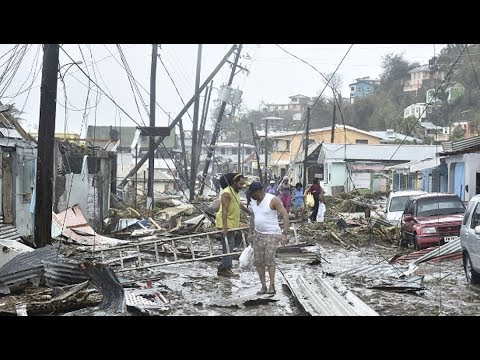
It's been almost six months since Hurricane Maria hit Puerto Rico.

While power has been restored to most of the island, rural areas are still without electricity.

The government estimates that all power will be restored by May of this year, just in time

for the start of the next hurricane season.

Hurricane Maria caused an estimated 100 billion dollars in damage, destroying nearly 400000

homes with over 135000 people fleeing to the U.S. mainland.

Adding insult to injury, of the 23 billion dollars pledged in disaster aid so far only

1.3 billion have made it to the island, according to The Associated Press.

Puerto Rico's governor recently presented a new fiscal plan that is supposed to bring

about an economic recovery.

The congressional hearing was held about this earlier this week, in which the codirector

of the Center for Economic and Policy Research Mark Weisbrot testified.

Let's take a look at the short clip and a short clip of what he had to say.

MARK WEISBROT: This is an austerity plan.

They use words like new government model and right sizing and efficiency, but they're really

talking about cuts in health care, in education, in appropriations to the municipalities, who

have to repair a lot of damage, as well.

So this really can't work.

This isn't the only place where this has been tried.

You can look at Greece.

You can look at the other countries in the eurozone.

You can look at Jamaica, not far away, which has been under IMF agreements for decades

and has had hardly any growth in [per capita].

So that's the outcome you're going to get from trying to shrink the economy, basically

taking measures that will shrink the economy, in order to squeeze out debt service.

That's really what's going on.

GREG WILPERT: Joining me to now talk about Puerto Rico's new fiscal plan is Mark Weisbrot.

Thanks for being here today, Mark.

MARK WEISBROT: Thanks, Gregory.

GREG WILPERT: So before we get into your analysis of the post-hurricane fiscal plan, give us

a brief summary of what the plan actually proposes to do and what it projects for the

island's economic future.

MARK WEISBROT: Well, they're projecting a big drop in growth for this year.

And then five years of recovery, although the net growth for the six years will actually

be negative in real terms.

But ironically that's better than the last plan that they had in 2017.

So somehow they're projecting that they're going to do better after the hurricane than

they did before when, you know, they were already, you know, before the hurricane hit

Puerto Rico was already, already had a decade of, a lost decade, really, of no growth in

income or GDP.

GNP is what they usually measure there for various reasons.

And so then the plan that they had, the last, last year before the hurricane, guaranteed

them another 10 years, and most likely more, without economic growth.

And then of course you had 10 percent of the population left the island before the hurricane.

And this plan is projecting another 19 percent population loss over the next six years.

So there's still no light at the end of the tunnel.

And that's what I was saying in that clip there, that this is a classic kind of austerity

in the midst of recession, with the added problem that the the island has been enormously

damaged by the hurricane, they haven't got anywhere near the aid that they need to rebuild.

And the population loss is a huge drag on demand that will also push the economy downward.

GREG WILPERT: So are you saying basically that the plan is, despite its relatively dire

predictions, is not just not realistic because the economic impact will be even greater than

what they estimate.

MARK WEISBROT: That's right.

Just like the last plan, it's really underestimating the length and depth of the recession that

is likely to, or the fall in economic output that's likely to happen.

GREG WILPERT: Just give us some of the details as to why that is.

I mean, what kinds of austerity are they proposing and why is this going to have such a major

impact?

MARK WEISBROT: Well, they have, over the next six years they have about 13 billion dollars

in cuts in health care, in education, in what I mentioned.

The allocations to the municipality.

So this is what's really going to, this is really going to hurt the economy.

But I think the population loss is even worse.

If you're not creating any jobs for people there people are going to leave, especially

given the conditions.

And so that's what's really doing it.

GREG WILPERT: And so what do you think needs to happen for Puerto Rico to truly recover?

MARK WEISBROT: I think they have to have an immediate stimulus.

They have to focus on economic recovery first, and then talk about whatever kinds of structural

reforms they say are needed, and a lot of them are dubious.

I think that's what has to happen.

They have to rebuild, and they have an opportunity to rebuild.

They should be doing that.

They can provide jobs in construction, for example.

And they're, you know, rebuilding all of the lost infrastructure that was already in bad

shape even before the hurricane.

So that's what has to be done first and then they can talk, and they're not going to be

able to pay the debt.

That's the other big thing.

Because they're trying to run, and they are projecting, which will never appear, but they're

projecting a budget surplus of about 3.4 billion over the next six years, and that go would

go to debt service.

So they're basically squeezing the economy and trying to impose austerity in order to

pay off debt which is just completely unpayable.

They have to recognize that and they have to have debt cancellation.

GREG WILPERT: So what do you make of the other ideas in this plan, such as the privatization

schemes?

One involves the privatization of the island's power company, and another also of the school

system, basically introducing almost all charter schools for Puerto Rico.

What do you think of that?

MARK WEISBROT: Yeah, well, this is another example of taking advantage of this situation

to get things for, you know, private corporations, and of course the owners of the debt.

I think that the privatization they have some experience with, they privatized the water

and sewer utility before and it was a terrible disaster.

They lost money on it, it didn't work.

And I think the privatization of electricity is another huge mistake.

GREG WILPERT: So just one more point.

You make the comparison in your testimony to Greece, for example which also was forced

to cut back in the midst of a recession.

I'm just wondering, what is it about the economics of the people who are proposing these things

to believe that you can continue to cut from, in other words, to impose austerity and still

have economic growth when they experience, at least from Greece, just shows the opposite?

How do you explain that, that they keep providing the same kind of recipes and expecting a different

result?

Well, that's a good question.

I mean, Greece, in a sense this is much worse than Greece.

I mean, Greece, the private bondholders had to take a haircut of 50 percent.

And in Greece, well, they were doing other things.

It wasn't really to try and squeeze debt service out of Greece so much as it was to force them

to make these so-called reforms that hurt people there that people would never vote

for, cuts in pensions and reduction in minimum wage and so on, which you know.

Here they're really trying to squeeze debt out of them in addition to making these really

unpopular reforms.

I think this can only happen because Puerto Rico is a colony.

I mean, they don't have, if they were an independent country they could default on their debt like

Argentina did at the end of 2001, and they could recover.

And they, you know, and they would have their own currency and their own central bank.

If they were even a state they would have voting representation in Congress.

They'd have, like, four representatives and two senators.

So they could get, you know, be treated like other U.S. citizens.

You know, they've got four years here where they're not even going to get the normal Medicaid

payment from the federal government that the states get.

That's billions of dollars there.

Billions of dollars of their debt are a result of not getting the Medicaid that that states

get.

And again, there's no reason for that.

They're U.S. citizens, why shouldn't they get that?

You know, this is the kind of thing.

They're really treated completely differently because they're a colony, and disenfranchised,

and run by people who, they have no accountability in the U.S. Congress.

There's no accountability whatsoever to Puerto Rico.

GREG WILPERT: OK.

We're going to have to leave it there for now.

I'm sure we're going to come back to the issue a couple of months from now, probably.

I was speaking to Mark Weisbrotm codirector of the Center for Economic and Policy Research.

Thanks for doing this today, Mark.

MARK WEISBROT: Thank you.

GREG WILPERT: And I'm Greg Wilpert for the Real News Network.

For more infomation >> Puerto Rico's New Fiscal Plan Will Cause Another 'Lost Decade' - Duration: 10:36.

-------------------------------------------

World War 3⚠️North Korea WILL hold urgent peace summit – Kim Jong un REVEALS date and VENUE_us news - Duration: 3:29.

North Korea WILL hold urgent peace summit – Kim Jong un REVEALS date and VENUE

For more infomation >> World War 3⚠️North Korea WILL hold urgent peace summit – Kim Jong un REVEALS date and VENUE_us news - Duration: 3:29.

-------------------------------------------

[Panwink 7] I will wait for you part 5/5 - Duration: 3:39.

For more infomation >> [Panwink 7] I will wait for you part 5/5 - Duration: 3:39.

-------------------------------------------

daphnia magna care will make you produce unlimited supply of koi food - Duration: 5:17.

For more infomation >> daphnia magna care will make you produce unlimited supply of koi food - Duration: 5:17.

-------------------------------------------

Who Will Stop the US-Russia Arms Race? - Duration: 14:14.

AARON MATE: It's the Real News.

I'm Aaron Mate.

President Trump is drawing heat for congratulating Russian President Vladimir Putin on his re-election

victory.

During a phone call with Putin this week Trump reportedly ignored a written directive from

his aides that instructed him, quote, do not congratulate.

Speaking to MSNBC, Democratic Sen. Mark Warner echoed the outraged response from Republican

Sen. John McCain.

MARK WARNER: I think John McCain put out a statement today, and his words were better

than mine.

He says, the leader of the free world doesn't call up and congratulate a dictator over a

sham election.

And clearly that's what happened today.

AARON MATE: News of the friendly phone call prompted former CIA Director John Brennan

to suggest that the Russians could have compromising information on Donald Trump.

REPORTER: Why won't the president confront Vladimir Putin, why won't he read the cards

and say the things that you say need to be said to Vladimir Putin?

Do you believe he is somehow in debt to the president of Russia?

JOHN BRENNAN: I think he's afraid of the president of Russia.

REPORTER: Why?

JOHN BRENNAN: Well, I think one can speculate as to why.

That the Russians may have something on him personally that they could always roll out

and make his life more difficult.

REPORTER: Do you believe Russia has something on him?

JOHN BRENNAN: I believe that the Russians would would not, they would opt for things

to do if they believed that it was in their interests.

And the Russians, I think, have had long experience with Mr. Trump and they have things that they

could expose.

REPORTER: Something personal, perhaps?

JOHN BRENNAN: Perhaps.

Perhaps.

AARON MATE: In his defense, Trump said on Twitter that President Obama had also congratulated

Putin during his last win in 2012.

And like Obama, Trump claimed he wants to cooperate with Russia on several issues, including

the arms race.

This comes weeks after Putin gave a speech unveiling a new nuclear arsenal and blaming

the U.S. for the arms race.

He later spoke to NBC News.

VLADIMIR PUTIN: If you were to speak about arms race, then an arms race began at exactly

the time and moment when the U.S. opted out of the Antiballistic Missile Treaty.

AARON MATE: Well, why does Russia blame the U.S. for the arms race?

And in this current political moment, can their differences possibly be resolved.

Well, to discuss this, I spoke recently to Professor Stephen F. Cohen, professor emeritus

of Russian studies at New York University and Princeton.

And I began by asking him what Putin is seeking in his relationship with the U.S.

STEPHEN COHEN: Well, let's begin by saying that there's hardly been a time when Putin

did not call for good relations with the United States, even in the worst of times.

And he continues to refer to American political leaders as 'my partners,' even in the worst

of times.

This, by the way, drives harder line, or harder line people in the Soviet security establishment

up the wall.

They say to him, why do you keep calling them your partner?

Putin is a guy who came to power with the hope and intention of a real, functional,

constructive economic political relationship with the United States.

And though he may have given up that hope, he still calls for it.

The speech he gave that you're referring to, the equivalent, I guess, of the state of the

Union speech on March 1, was exceedingly important.

The first two thirds of it was essentially his electoral program.

It dealt with domestic issues, what he hopes to do for the Russian people.

It was very similar to speeches made here during our elections.

He talked about education, he talked about infrastructure, he talked about pensions.

He talked about health care.

No American would be surprised.

[But the latter third.

Putin called it historic, and I think it is.

And we can explain this simply.

Ever since the America and the Soviet Union acquired the capacity to put nuclear warheads

on ballistic missiles, cross the seas and strike the other country, we have been in

a strategic agreement called mutual assured destruction.

And all that meant that if Washington launched at Moscow, within minutes Moscow would launch

at Washington, and both countries would be grievously affected, if not completely destroyed.

And this doctrine, called MAD, may seem frightful, but it kept the nuclear peace until the idea

came up that you could build an antiballistic missile weapon, missile defense.

It started with Reagan.

To prevent that, I think signed in 1972, was a treaty, the antiballistic missile treaty,

which meant that the sides were prohibited from deploying antiballistic missile systems

in order to preserve this mutual assured destruction so that neither side would be tempted to launch

a first strike.

Each side, America and the Soviet Union, was given one exemption exemption.

Moscow put a missile defense system over, Russia did over Moscow.

And I think we have our someplace in South Dakota for some reason, I'm not sure why.

In 2002 President Bush left this treaty, nullified it unilaterally.

Ever since then we've been pushing missile defense installations toward Russia.

I think there are 30 or 40.

They range from, as I understand it, California to Alaska.

But there's one operating in Romania, one to open in Poland.

But here's the thing.

we've figured out how to deploy them on ships.

And so these anti-missile defense systems are sailing on ships in the Black Sea and

the Baltic Sea, right on Russia's borders.

So what did Putin say?

And it's really, if if half of what he claimed for these weapons is true, and I'm sure more

than half is true, he said, we have developed several weapons that do not lie at the ballistic

level.

That is, high in the sky and descend.

They fly much lower, much faster, and they can allude any any missile system that you

Americans have spent trillions of dollars on.

So therefore, we have restored mutual assured destruction.

He's saying that you Americans, and it's true some Americans did this, tried to develop

missile defense so that you could threaten us wit,h or perhaps launch, a first nuclear

strike knowing that your missile defense would protect you from retaliation.

He said that was a fiction from the beginning.

But we now have these new weapons which make it absolutely impossible.

And so he ends by saying, therefore, having restored the balance of sanity, let us sit

down and have major nuclear weapons talks again.

But again, Aaron, I mean, if it's true, and I have no reason to think it's not true, though

the stages of development of these weapons is a little unclear, it's true what Putin

said about these four or five new weapons systems.

We are now in a completely new era, because since the end of the Soviet Union the United

States has tried to develop at least the capacity of a first strike capability at Russia using

these missile defenses.

That is over.

It's not possible any longer.

Trillions of dollars have been wasted.

By the way, I forget which administration, Bush or Obama, made missile defense a NATO

project.

It started out as an American project.

But it officially gave it to NATO.

Why?

Because where NATO goes, the missile defense installations go, and NATO has expanded right

to Russia's borders.

So this is an historic turning point, assuming what Putin said is largely true.

Though you wouldn't know it.

I guess you had on professor Theodore Postol of MIT.

And I mean, Ted is excellent on this stuff but you don't get any of this in the mainstream

media.

Putin's speech was read as an act of threatened aggression against the United States.

It was just the opposite.

AARON MATE: Right.

And you know, I think what we often forget, too, is that as this missile system , defensive

missile system, whatever it's called, was developed, especially under Bush number two,

George W. Bush, it was billed to Russia for so long as being targeted towards Iran.

Which seems like a pretty tough sell to accept when, when it's actually being positioned

so close to Russia.

STEPHEN COHEN: Look, it's bogus.

It's fiction.

It's B.S.

It's disinformation.

It's American propaganda.

The reality is this: Russia has been protesting about the, once we left, Washington left the

Antiballistic Missile Treaty, Russia has been protesting what we've been building.

We told Russia, why are you worried?

It has nothing to do with Russia.

This is all about Iran and, quote, rogue states, unidentified.

Russia said, OK, in that case let's build it together.

We actually have better radar facilities than you have.

We'll build it, we'll manage it together.

We refused that systematically.

Every attempt Russian made to join in the creation of a missile defense system was rejected

by Washington.

Everybody, unless, you know, you believe in the Easter Bunny, I guess, that this system

as it was expanded, increasingly, and it branched out, was directed at Russia.

I mean, maybe it would have worked against Iran, too, but that was going to be a bonus.

This was about Russia.

The Russians knew it.

You and I knew it.

Everybody knew it.

Do you know what is an indestructible weapon system?

AARON MATE: No I don't.

STEPHEN COHEN: One funded in all 50 states.

All right.

That's what this missile defense has been.

They farmed out manufacturing of it everywhere from Paducah Kentucky to Israel.

Everybody gets a piece of the action.

Therefore you get no protest in Congress because it's constituency politics.

And that's true of a lot of the weapons systems we make.

They're indestructible when all 50 states get a piece of the action, and that's what

you have with this missile defense stuff.

AARON MATE: OK, so, speaking of Congress.

If there is to be any push for Trump to engage with what Putin said seriously and try to

restart some sort of arms control talks, including the New START treaty, which Trump has indicated

little interest in advancing, you'd think that it would be Trump's opposition party

who would be pushing him towards that.

Now, recently there were some Democratic senators to call for a new round of strategic arms

talks with Russia.

But I want to read to you a quote from the Senate Democratic leader Chuck Schumer, where

he is greeting the news of Mike Pompeo now being the secretary of state.

And instead of pointing to Pompeo's open disdain for the Iran nuclear deal and his hawkishness

on things including Russia, this is what Chuck Schumer said.

He said: The instability of this administration and just about every area weakens America.

If he's confirmed we hope that Mr. Pompeo will turn up we'll turn over a new leaf and

will start toughening up our policies towards Russia and Putin, unquote.

So Professor Cohen, as we wrap, that is the top priority from the leader of the opposition

party Chuck Schumer, for the new nominee to be secretary of state to be tougher towards

Russia.

STEPHEN COHEN: Well, but it's not just Schumer.

And Schumer is not to make this distinction as statesmen.

He is a kind of local politician risen way above his pay grade when it comes to foreign

affairs.

It was outrageous what he said.

But a lot of the Democratic leaders are saying this sort of thing.

I mean, let me make the point you made before.

One reason this situation is so dangerous, Aaron, so dangerous, is that in the '70s and

'80s, and I participated at a junior or younger level, the debate over Cold War or detente

in the United States, that the pro-detente people, the anti-Cold War people had lots

of very senior allies many in Congress.

Even in the State Department.

Even among presidential aides.

It was always a fair fight.

There is no one today.

Only the Schumers and the Pelosis.

And they have become with this Russia gate stuff, claiming that Putin attacked America

and it was like Pearl Harbor or 9/11.

I mean I never call people names, but this is warmongering.

That's exactly what it is.

If you claim Russia attacked America, the assumption is we have to attack Russia.

And we're talking about nuclear war potentially.

So what kind of political leadership is, we have descended into a morass of degraded commentary

on Russia that has never even when the Soviet Union existed, even during the worst days

of the Cold War, we didn't have this kind of discourse.

AARON MATE: We have to leave it there.

Professor Stephen F. Cohen, professor emeritus of Russian studies at New York University

and Princeton University.

Thank you.

STEPHEN COHEN: Pray a lot, Aaron.

AARON MATE: Will do.

And thank you for joining us on the Real News.

For more infomation >> Who Will Stop the US-Russia Arms Race? - Duration: 14:14.

-------------------------------------------

The FBI Will Expose Hillary's DIRTIEST FILES If Everyone Does One Simple Thing Now - Duration: 33:12.

The FBI Will Expose Hillary's DIRTIEST FILES If Everyone Does One Simple Thing Now

Ty Clevenger, a New York lawyer, filed a Freedom of Information Act request concerning Hillary

Clinton's email investigation in March 2016.

Last week he heard back from the FBI regarding the request- and guess what?

His request was denied.

Why was it denied?

According to the FBI, not enough "public interest" was shown to justify completing

the request.

The FBI says that it will only release records from files of former investigations if the

subject directly consents, is deceased, or if there is strong public interest in the

case.

FBI records management section chief David M. Hardy bolstered the last claim, telling

Cleavenger in an email that:

"You have not sufficiently demonstrated that the public's interest in disclosure

outweighs personal privacy interests of the subject."

And also:

"It is incumbent upon the requester to provide documentation regarding the public's interest

in the operations and activities of the government before records can be processed pursuant to

the FOIA."

Now, considering that the Clinton email investigation was a major scandal during the 2016 election

that captivated a good part of the electorate, I'd say that seems like "public interest'

to me.

Clevenger was specifically looking for documents that were filed after a referral to the Department

of Justice from former House Oversight Chairman Jason Chaffetz, who asked the DOJ to:

"investigate and determine whether Secretary Clinton or her employees and contractors violated

statues that prohibit destruction of records, obstruction of congressional inquiries, and

concealment or cover up of evidence material to a congressional investigation."

Clinton was found to have used a secret, non-government, server during her time as Secretary of State.

The FBI determined that she did not deserve charges because she allegedly did not know

the dangers of having a secret serve, even though sje did put national security at risk.

Cleavenger said of the ruling to the Washington Times:

"I'm just stunned.

This is exactly what I would have expected had Mrs. Clinton won the election, but she

didn't.

It looks like the Obama administration is still running the FBI."

"How can a story receive national news coverage and not be a matter of public interest?

If this is the new standard, then there's no such thing as a public interest exception."

A petition has already been started to refute Hardy's claims and prove that there IS interest

in the Clinton email scandal- sign in here!

Something is seriously up with this FBI investigation if they think there's no "public interest."

Sounds like a lame excuse.

Luckily we have people like Ty Cleavenger willing to get to the bottom of it one and

for all!

Get on that petition

and sign away, Patriots!

For more infomation >> The FBI Will Expose Hillary's DIRTIEST FILES If Everyone Does One Simple Thing Now - Duration: 33:12.

-------------------------------------------

Will We Ever Decode The Voynich Manuscript? - Duration: 5:23.

Hello and welcome back to Life's Biggest Questions, I'm Ron McKenzie-Lefurgey.

The Voynich Manuscript is one of the most elusive pieces of writing known to man, written

in a code that has yet to be cracked.

We don't know who wrote it, why they wrote it, or even the language in which it was written,

but that doesn't stop us from continuing to study it to this day.

But do we have any ideas about it?

And will the mystery ever be solved?

Let's explore.

If you want more videos like this one, check out our "Biggest Debated Topics" playlist

on the channel.

Now get ready, it's time to ask the question: Will we ever decode the Voynich Manuscript?

The Voynich Manuscript is an illustrated and hand-written codex, named after Wilfrid Voynich,

a Polish book dealer who bought the manuscript in 1912.

It's been carbon-dated to the early 15th century, believed to have been written during

the Italian Renaissance.

Roughly 240 pages remain, with text written from left to right, using 25 to 30 distinct

characters.

It also includes a number of diagrams and even some pages with foldable sheets.

Thus far, decoding efforts have been met with little success.

Using the diagrams, researchers have determined that it's likely divided into 6 sections:

herbal, astronomical, biological, cosmological, pharmaceutical, and recipes, possible including

some mystical elements as well.

Unfortunately, that's just about all we know about it, despite decades of attempting

to decipher it.

Most experts believe that it is likely written using a substitution code, wherein each letter

of the alphabet is substituted with a different symbol.

Unfortunately, researchers continue to struggle to find what letters they initially were,

and thus, what language it originated from.

Some believe that it is further encoded using anagrams, mixing up the letters of each word,

although this is a point of contention amongst researchers.

This would make it even more difficult to crack, and would explain the difficulty we've

had in decoding it.

As far as the use of the text, many agree that it is likely medical in nature, due to

the categories into which it is believed to be divided.

It bears a striking resemblance to certain known Latin medical texts from around the

same time, with some even arguing that it was a plagiarism of said texts.

Some make further arguments as to the involvement of alchemy and astrology in the text, but

this is little more than educated speculation.

There has also been a good deal of discussion as to the author of the manuscript.

Much of this is based on the rather unique skills and knowledge of the author, as well

as some he-said she-said correspondence in the form of letters from the time.

The most popular explanation is that it was written by Roger Bacon, a Franciscan friar

who happened to be a polymath.

The many languages of the polymath would certainly come in handy when composing a manuscript

in a cryptic code.

Some think it could actually be the work of Italian engineer Giovanna Fontana.

This is because many of the drawings in the manuscript resembled known works of Fontana.

He also used code in his own work, and so would be well-equipped for the writing of

the manuscript.

Still others believe that it was Voynich himself who wrote it, in an attempt to pass it off

as Bacon's work, in order to sell it and make a great deal of money.

As a bookseller, he would likely have had the experience and skills necessary to make

the forgery.

For a time, this was discounted, since the carbon dating of the manuscript would have

required him to have access to a great deal of unused parchment from the 15th century.

However, with the recently discovered forgery of the 2000 year old Dead Sea Scrolls, it

seems that the idea of Voynich forging the manuscript isn't as ridiculous as we once

believed.

Unfortunately, recent decades have brought us little more than speculation and vague

inferences.

However, with the advancements in AI codebreaking of late, many believe the solution has never

been closer.

In early 2018, reports began circulating that an Artificial intelligence had been tasked

with decoding the manuscript, and that it had succeeded.

Sadly, this seems more like a case of media sensationalism than a definitive answer.

It all started with the presentation of a paper entitled Decoding Anagrammed Texts Written

in an Unknown Language and Script, where Greg Kondrak and Bradley Hauer claimed that the

manuscript had originally been written in Hebrew, before being encoded.

This was found using computer algorithms that studied various features of the code, such

as the frequency of each symbol.

They translated the code into Hebrew, and then the Hebrew into English, to come with

what seemed to be coherent sentences.

Unfortunately, further analysis found that Kondrak and Hauer made a number of missteps

that may have hurt the efficacy of their findings.

For one, they were basing it on the structure of modern languages, while the manuscript

is believed to have been from the 15th century, where the language structure would be much

different.

Furthermore, the pair was assuming that the code was based on anagrams, thus required

a rearrangement of letters.

This led them to rearrange certain letters in Google Translate when trying to translate

the Hebrew into English.

And as it happens, written Hebrew is very easy to manipulate, since it is written without

vowels.

It would have been rather easy for the researchers to simply change the words so that they made

sense in English, giving the appearance of a successful codebreaking.

They weren't necessarily putting the puzzle together; they could well have been shoving

pieces in where they didn't fit and they would be none the wiser.

Despite the high hopes of the media, this finding is far from conclusive, even if it

does make the use of AI in codebreaking seem more promising.

And now we return to our question: Will we ever decode the Voynich Manuscript?

Well, it's hard to say.

We have learned a small amount over the years, and research into AI codebreaking is looking

good, but it's impossible to know if we will ever fully decode it.

It could even be that it can't be done; perhaps it was written in gibberish as an

ancient prank.

Regardless, the search continues, and if it's something that interests you, I'd highly

advise getting involved.

Maybe you will be the one to finally crack the code.

Thank you for watching Life's Biggest Questions, I hope this was interesting and informative,

and maybe even inspired you to look into it further on your own.

If you liked this video, please thumbs up and subscribe to the channel down below.

While you're down there, let me know your thoughts on this famous manuscript, and also

what other mysteries you'd like us to delve into in future videos.

Until next time, I'm Ron McKenzie-Lefurgey with Life's Biggest Questions, wishing you

the best of luck, on your quest for answers.

For more infomation >> Will We Ever Decode The Voynich Manuscript? - Duration: 5:23.

-------------------------------------------

HOLY CRAP! It's Official! Here's The Exact Time and Location Trump Will Meet Kim Jong - Duration: 5:48.

For more infomation >> HOLY CRAP! It's Official! Here's The Exact Time and Location Trump Will Meet Kim Jong - Duration: 5:48.

-------------------------------------------

HOLY CRAP! It's Official! Here's The Exact Time and Location Trump Will Meet Kim Jong - Duration: 5:37.

HOLY CRAP!

It's Official!

Here's The Exact Time and Location Trump Will Meet Kim Jong

Political tensions with North Korea and the United States have been heating up for years.

Discussions over whether nuclear war would eventually come were already taking place.

Shortly thereafter, the Trump administration was able to make a deal with North Korea after

the 2018 Winter Olympics whereby they agreed to sit down and discuss peace talks.

Details regarding this meeting are beginning to emerge.

South Korea, a staunch and loyal ally of the United States, has been playing intermediary

since the Winter Olympics where they agreed to have a one Korea team.

Something that had not been done in decades.

They recently made the United States aware that Kim Jong-un agreed to high-level discussions

with South Korea in Panmunjom on March 29th.

It is a small border village that provides intimacy and quiet in North Korea while straddling

the Demilitarized Zone.

The U.S. – North Korea talks are being finalized as well.

The Daily Star reported,

'Its announcement comes ahead of the highly-anticipated talks between Donald Trump and Kim.

The rogue state is expected to release three US prisoners as a goodwill gesture before

the May meeting.

Captives Kim Dong Chul, Kim Sang-duk ad Kim Hak-song, were all accused of so-called "hostile

acts" against Pyongyang.

US-North Korea relations expert, Frank Jannuzi said he "would not be surprised" if Kim

released the prisoners.

He added: "I don't want to get their families' hopes up but I would not be surprised if the

North Koreans take that step.

"It would send a very positive message.

The North Koreans have studied Donald Trump very carefully since he was elected in 2016.

"We have to remember that these three are of no strategic relevance at all.

They know that to release them would allow him to claim a victory.'

But, there are fears the talks could collapse following the US' statement it would carry

out intense military drills on Easter Sunday.

Seoul and Washington said in January they would delay the annual exercises, known as

Key Resolve and Foal Eagle, until after the Olympics and Paralympics held in South Korea.

North Korea sees the drills as a rehearsal for invasion."

The meeting between North and South Korea in March is expected to be followed by President

Trump sitting down with North Korea shortly thereafter.

If this were to occur President Trump would be the first American president to sit down

with the leader of North Korea.

Something which is very symbolic because North Korea and the United States are still technically

at war because the 1950-1953 Korean War was ended in a truce but not a peace treaty.

South Korean President Moon Jae-in recently said the following regarding how important

the venue is to their meeting,

'The North Korea-United States summit, which will follow the inter-Korean summit, will

itself be a momentous event in world history.

Depending on where the meeting takes place, it will look even more dramatic, and depending

on progress, there can be a three-way summit among South and North Korea and the United

States.'

While South Korea has agreed to meet North Korea in Panmunjom the United States probably

will not be.

The town has a historical significance to the United States because North Korean soldiers

murdered two U.S. Army officers in 1976 with axes.

Discussions about talks taking place in Sweden and Switzerland have been rolling around but

nothing has been confirmed.The New York Times reported,

'South Korea proposed holding high-level talks at Panmunjom on March 29 to discuss

the agenda and other details of the inter-Korean summit meeting.

North Korea has yet to publicly announce that Mr. Kim has invited Mr. Trump to a summit

meeting, and its state-run news media has not reported on Mr. Trump's acceptance of

the offer or the agreement to hold an inter-Korean meeting.

Analysts said the silence was not unusual for the North Korean regime, which could fear

raising expectations too early among its people.

United States officials have been reaching out to the North Koreans to hear directly

from them about Mr. Kim's invitation and learn more about his intentions, particularly

since he was quoted by South Korean envoys as telling them he was interested in discussing

denuclearizing his country.

Officials and analysts remain unsure whether Mr. Kim's offer signals a fundamental shift

toward dismantling his nuclear arsenal or represents a short-term ploy to confuse his

enemies, ease sanctions and buy time to further advance his nuclear weapons and intercontinental

ballistic missile programs.

The plan to hold summit meetings within just weeks of each other is presenting unprecedented

challenges to diplomatic officials.

The leaders would most likely face each other without first having lower-ranking officials

work out nettlesome details of an ambitious agenda, particularly how to end the North's

nuclear weapons program.'Regardless of how the meeting will actually take place, it is

clear it will take place and both countries are stepping closer to actually making it

come to fruition.

Whether it is in North Korea or Europe, it will happen, but what comes about as a result

of the meeting remains to be seen.

For more infomation >> HOLY CRAP! It's Official! Here's The Exact Time and Location Trump Will Meet Kim Jong - Duration: 5:37.

-------------------------------------------

"Ich will": Hier macht Fan Jenny Frankhauser einen Antrag! - Duration: 1:02.

For more infomation >> "Ich will": Hier macht Fan Jenny Frankhauser einen Antrag! - Duration: 1:02.

-------------------------------------------

India will 'DESTROY Pakistan and CRIPPLE China in two front Nuclear war - Duration: 3:47.

For more infomation >> India will 'DESTROY Pakistan and CRIPPLE China in two front Nuclear war - Duration: 3:47.

-------------------------------------------

FUNNY KIDS Videos Will Make You LAUGH - TRY NOT TO LAUGH CHALLENGE - Duration: 10:39.

Thanks for watching

Hope you have a great time

Please, like, comment and subscribe for more!!

For more infomation >> FUNNY KIDS Videos Will Make You LAUGH - TRY NOT TO LAUGH CHALLENGE - Duration: 10:39.

-------------------------------------------

Will It Slime? Slime Kit Test #763 - Satisfying Slime ASMR 2018 - Duration: 10:30.

Will It Slime? Slime Kit Test #763 - Satisfying Slime ASMR 2018

Không có nhận xét nào:

Đăng nhận xét