MARCIA DAY CHILDRESS: Good afternoon.
I'd like to welcome you to today's Medical Center Hour,
a program called The Death Gap, How Inequality Kills.
I'm Marcia Day Childress from the Center
for Biomedical Ethics and Humanities
here in the School of Medicine.
And the Center brings you these weekly medicine
in society forums known as the Medical Center Hour.
Today is the last program in what
is our 46th year of continuous production.
It also doubles as the Alpha Omega Alpha
lecture of the School of Medicine for this year.
We hear much these days about the yawning gap
in our country between the rich and the poor, the haves
and have-nots.
Inequality is all around us and it's
taking a serious toll on personal and population health.
The poor die sooner.
Blacks die sooner.
And poor urban blacks die sooner than almost everyone else.
Indeed, there's a 35 year difference
in life expectancy between America's wealthiest
and healthiest enclaves and our poorest
and sickest neighborhoods.
Internist, David Ansell, has worked
for four decades in hospitals that serve Chicago's poorest
communities.
He's witnessed firsthand the structural violence
of racism, economic exploitation,
and discrimination responsible for grim health outcomes
among the poor.
And he's written about this in this compelling book, The Death
Gap.
The book is informed by his dual perspective
as both a practicing clinician and an administrative leader
in an academic medical center.
Dr. Ansell is the Michael E Kelly MD Presidential Professor
of Internal Medicine, associate provost and senior vice
president for system integration and community health and equity
at Rush University Medical Center in Chicago.
He comes to us today as UVA's AOA visiting professor
sponsored by the National Medical Honors Society,
Alpha Omega Alpha, and hosted by our local chapter.
For all that he's seen and done, David Ansell is hopeful.
Geography or ZIP code, he argues, need not be destiny.
Individual practitioners, health care institutions,
social forces, and political players
can join together with at-risk communities
to remedy the devastating socioeconomic conditions that
engender the death gap.
But this isn't easy work, because it will surely spill
over into the next generation.
We've invited a graduating medical student
to offer a response.
Toby Ubu-- on my far right--
class of 2018, will soon be a resident, training to practice
and preparing, perhaps, to lead colleagues,
the clinical enterprise, and community in efforts
to lessen or altogether erase health disparities.
Toby will tell you something about himself in his talk,
but I'll tell you right now that he's one of our generalist
scholars--
a member of our peer-selected Gold Humanism Honor Society
chapter, and also by peer selection,
this year's recipient of the Leonard Tow Humanism
in Medicine Student Award.
I'd like to thank the UVA chapter of Alpha Omega Alpha
National Medical Honor Society, and graduating student
and lastly, the AOA president as our partners in this program.
And as you saw when you came in, the UVA bookstore
is just outside the upstairs door
with copies of The Death Gap, which David Ansell
will be happy to sign.
So let's begin looking at the death gap, David Ansell,
and Toby Ubu.
DAVID ANSELL: Thank you.
[APPLAUSE]
Thank you.
I'm pleased to be here today.
Thank you for that wonderful introduction.
My father would have loved it, and my mother
wouldn't have believed it.
[LAUGHTER]
But I just want to say, as a preview--
MARCIA DAY CHILDRESS: Is your mic on?
DAVID ANSELL: Is my mic on?
Can you hear me?
MARCIA DAY CHILDRESS: Yes, it is.
DAVID ANSELL: I have a very loud voice.
Oh, there it is.
That's better.
Not everyone is going to like what I have to say.
I mean, in my experience, some people walk out.
That's totally fine.
What I hope to do with an audience like this,
is convince like 5%--
three or four people in a room--
that if one follows a certain path,
we can actually make big changes.
And I understand in a room this big,
there's usually about three, or four, or five people.
But just to get started, I'm going
to show you why we as primates reject inequality as a concept,
or as an idea.
And I'm going to play a little video for you.
And we're going to jump into the presentation.
All right, I want to just show you
that experimenting with the most basic of primates,
how inequality is rejected.
You could actually look at the monkey thing
as the orthopedic surgeons versus primary care doctors.
There are many different analogies you can have.
So my talk today is the death gap, how inequality kills.
But I really want to spend the last part of it talking
about, what do we do, so we get beyond just talking about it.
I have no disclosures.
That's me in front of the old Cook County Hospital,
where everything I tell me today,
I learned 40 years ago when I started my internship.
I know many of you are thinking, he looks very, very young.
It can't be 40 years.
Just a little bit about my experience.
I've been a doctor for 40 years in Chicago--
started my internship in 1978.
And I spent 17 years at Cook County Hospital, 10 years
at a place called Mt.
Sinai, Sinai Health System, which is a teaching hospital--
safety net hospital-- and then, got
recruited to Rush University Medical Center
to be the chief medical officer.
I was chair of medicine at Sinai.
I was chief of General Internal Medicine
at Cook County when I left.
But my patients came with me.
And it was along one street in Chicago--
Ogden Avenue-- and I call that street one street, two worlds.
Because not only were there two worlds of health
care as I experienced through my own experience
at what was accessible through the eyes of my patients.
But there are people in these neighborhoods that were served
with two different lives.
And it was a shock to me when I got
to Rush, an academic canticles center,
where everything was in reach--
if you had the right card to get you in the door.
And people on the inside of Rush did not
seem to see what was on the outside.
And so as chief medical officer, while I was doing that work,
I wrote these two books.
One was County-- Life, Death, and Politics
at Chicago's Public Hospital, which kind of tells
the story of what was it like to be an intern at Cook County
Hospital in 1978.
Come with me, and I'll show you.
And then, The Death Gap--
How Inequality Kills, how is it really working?
How does it really work?
And so that's the topic of my talk today.
I'm going to talk in three parts.
I'm going to talk about how I discovered
the problem of inequality as it relates to health,
and how I learned to practice social medicine.
Then, I'm going to talk about the social determinants
of health, but I'm going to distinguish them
from the social determinants of inequity.
It's really important that we name these things very, very
specifically.
And then, I'm going to turn at the end,
this is the prescription for burnout,
for avoiding burnout, which is practicing medicine
with your heart and your feet.
So I have three parts, because if the first part gets
really boring, there will be a second part coming soon.
So that was me in my fourth year of medical school.
I've grown into my ears here.
But actually, I got to medical school in upstate New York
and realized that the issues that were important to me
weren't really discussed in medical school.
I was really interested in the intersection
between society and health.
And there seemed to be no discussion about this.
I was so frustrated with medical school
that first year, that in Syracuse, there
was a forestry school.
And I got an application.
I was a tree-hugger type, outdoorsy, crunchy,
and I thought I'd be a forest ranger.
But I pulled myself back from the proverbial woods.
I met another group of medical students.
And we started studying the US health care system back
in 1974 and 1975.
And all of us decided that there was something seriously wrong.
And when we decided about how to sort this out,
we realized that what we wanted to do was to be doctors.
But I had lost sight of why am I doing this.
And we were inspired by Rudolf Virchow.
And Virchow, who was a famous scientist/doctor
in the 19th century--
words like thromboembolism, cell biology, the modern autopsy
was discovered by Virchow.
But Virchow was asked to investigate
an outbreak of typhus in the Silesia region of Germany.
And he came back.
And in his report was the reason for the outbreak of typhus
was the lack of democracy in Silesia.
And he became known as the father of social medicine,
largely because no women were in medicine.
But when I went from the what I was doing-- which
was being a doctor, going to learn
to be a doctor-- to why I was doing it,
was health care to human rights.
So when I describe myself, I'm a general internist.
I practice general internal medicine, have for many years.
I'm an administrator.
I've been in many administrative roles in my life, in medicine,
and have done that while practicing.
I'm a social epidemiologist.
But I'm also, I call myself a human rights activist.
Because human rights is the core reason
why I went into medicine.
It's my why.
And whenever I have to make a decision as a doctor,
as an administrator, there are many decisions
you have to make as an epidemiologist except put
numbers together.
But whenever I make a decision, it's
always through a human rights social justice lens.
And so I have zero ambivalence when I'm faced with a decision.
I make a lot of other people nervous with my lack
of ambivalence.
But health care as a human right is at my core.
That's Virchow.
And Virchow said physicians are the natural attorneys
for the poor in our profession, nursing as well.
And we are because social problems-- to a large extent--
fall within our jurisdiction.
There are narratives-- those are the narratives
that we sit up at night thinking about, oh my gosh,
what just happened in that examination?
What did I just hear?
What did I just see?
So when it came time to do residency,
we looked all across the country, and said,
where could we go?
That was at the crossroads of medicine in society.
And so we pick-- like Toby did, we
picked-- a public hospital, Cook County Hospital in Chicago.
Just to put this in perspective what
that was like, three years before,
it had been discredited.
All our professors said it was career suicide to go there.
Public hospitals were, at one time,
the pinnacle of academic medicine in the United States.
But by the '70s, largely because the populations
they served changed and the rise of academic medicine,
they became very degraded.
Many were closing around the country.
Cook County Hospital was threatened with closure.
Here was what interview day was like.
This group of people you saw, we all hopped in a car,
drove 750 miles to Chicago to meet the chair of medicine,
Quentin Young.
We go to his office and say, we're here
to be interviewed by Dr. Young.
They said, he's out of town.
And I said, oh my god.
And next thing, some people we knew whisked us to a room.
It was like this size, filled with people.
We were sat in the back.
Someone put a leaflet in our hands and said,
Cook County Hospital is closed.
And people were up front exhorting the crowd
about saying, if we don't do this,
county hospital is going to close.
And some guy who has a family medicine resident--
he's now a chair of family medicine in Kansas--
he reached over and said, what are you here for?
I said, we're here to do an interview on internal medicine.
And he said, oh, you've got to come here.
It's great
[LAUGHTER]
And somehow, we made it through the day.
The next day, Quentin Young showed up.
We all did a group interview with him.
And when it came time to match, we only
matched one place on our match list--
Cook County Hospital.
And so on match day, we had no ambivalence.
We knew exactly where we were going, because if you're
an American grad and you put Cook County Hospital down,
God bless you.
You're going there.
Yeah, so this is where I've learned everything that I'm
going to talk about today.
Two years before, we went there.
The doctors, the house staff went out on strike.
And this is them marching downtown Chicago
to protest outside of the courthouse, where they had been
given a back-to-work order.
And so defying the back-to-work order, they marched downtown.
This still is the longest doctor strike
in United States history.
And they went out on strike for patient care conditions--
soap, water, Spanish interpreters, EKG machines.
And largely because this hospital served poor people--
all poor people, and black and brown people--
the conditions in there were nothing
short of decrepit and disastrous.
And I'm not going to go into a lot of detail
about what that was like, but this was to us, saying, OK.
There's a group of doctors who will fight for patients.
We're going to go there.
I want to tell you a little bit about this guy, Jack Raba.
So Jack was 26, a former seminarian,
graduate of Northwestern Medical School,
president of the house staff association as an intern.
And they won the strike, but the four strike leaders,
including Jack, was thrown into Cook County
jail for defying the back-to-work order,
so 10 days in Cook County jail.
It's Thanksgiving.
And the doctor doesn't show up at the jail hospital.
So they go to Jack's cell and ask him
if he would mind coming down and seeing
a patient, which he does.
He sees the patients, the jail patients.
And by mistake at the end, he walks out of Cook County jail.
He's on California Street in Chicago
and realizes he could hitchhike home, have Thanksgiving dinner,
hitchhike back and go back to jail, until he realized
that that would be a felony.
And he was in for a misdemeanor.
And so he knocked on the door of the cell and went back in.
Actually, the serious part of the story
is, this is a story about learning how to speak
and speaking up.
And as a young doctor, how these young doctors learn
to speak up, and how Jack learned to speak up.
The clock moves ahead many years.
I'm a house staff at Cook County Hospital.
We're working at the county jail.
It's a terrible training situation for residents.
So we do a work action.
We said, we're not going in there anymore.
They do a search for a medical director, and sure enough,
who gets to be medical director?
Jack Raba.
Like I said about Jack, he knew the place inside and out.
But even more importantly in the story was many years later,
one of his doctors contacted him and said,
I'm seeing someone who's been brought in by the police.
And he looks to be tortured.
He has burn marks on him.
He has electrical shock marks on him.
Jack went down to the jail and saw this prisoner.
And sure enough, he had been tortured.
And he sent a letter to the police chief in Chicago.
And as a result of that letter-- of Jack speaking up--
there was a commander of police on the south side of Chicago
who, with his henchmen, had been torturing black men
into giving confessions.
And many of them ended up on death row
by our former mayor who was the prosecutor, the state's
attorney--
Mayor Daley put him on death row.
And because Jack was willing to speak up,
this was not the first tortured person in Chicago.
It had been going on for many years.
It was the first time it was a doctor speaking up.
And $700 million in settlements against the city of Chicago
later, the end of the death penalty in Illinois
as a result of people being put on death row
for being tortured.
Jack's letter is on the wall of the law office that defended
these death row prisoners.
And the point of this talk is, we
as health care professionals, as doctors, have a voice.
We have a unique place to speak up.
And Jack's very mild-mannered and not a loud mouth like me.
But his speaking really made a difference
in the lives of people in Chicago.
When I was an intern, my parents are immigrants to this country.
They came from England.
My mother's family was wiped out in the Holocaust.
So all my relatives were in England.
And a BBC came to the United States
to do a documentary on health care in the United States,
to show the Brits the comparison.
And they came to Cook County Hospital.
The documentary, which is on YouTube, if you
ever want to watch it, is--
I call it murder, because they asked
a young doctor was talking about patients being transferred
to Cook County simply because they lacked insurance, and many
of them in very, very terrible condition, some
of them dying as a result or deteriorating, unstable.
And they asked this young doctor who was a year ahead of me
in residency, say, how do you describe to the British people
what's going on here?
And she said, I call it murder.
And that became the name of the BBC documentary.
And having never seen it till I wrote my book, County, I
was wondering, why did my relatives
start calling my mother to ask me if I was OK?
Because the documentary pretty honestly
depicts what Cook County Hospital was like,
health care for the poor.
So I told you, I not only learned
to be a doctor at Cook County Hospital,
and we learned social medicine.
Because we were--
I call this-- doctors within borders,
because we would see our patients and round.
And then, we would go downtown to fight for the hospital
to stay open.
One day, there was a payless pay day.
They ran out of money.
There was a rally and said, what are we
going to do with the patients?
And someone said, well, if we have no money, let's take them
over to Rush, because we knew that the private hospitals
wouldn't take them.
And so this is from The Chicago Tribune, the residents pushing
patients from the emergency room next door
to my hospital that I'm at now, Rush.
And it's not the right thing to do to do that to patients.
But in youthful exuberance, that's exactly what we did.
It turns out, that my CEO was chief resident at Rush
at the time.
And when my book on County came out, he said,
we were furious at you.
What kind of crazy people were you
that you'd push these patients over there?
And I said, but Larry, you have to understand
how we felt. And our backs were against the wall.
So this idea of one street, two worlds of experience
in health care drove us.
But we did learn that one could be effective at getting change
by being active.
It wasn't enough just to be good doctors.
But that wasn't enough, either.
Just getting up and telling stories of bad things happening
is not enough.
So this is a formula that I'm going to come back to,
that narrative, plus data, plus action equals change.
And I think in the world of fake news,
we have to come back to facts and data.
Narrative is not enough, because everyone has a narrative.
But narrative, plus data, plus action equals change.
So this is how I got into academic.
This was probably the turning point for me.
So when you walk in a place like Cook County Hospital,
I think one of three things happened to you.
You are overwhelmed by the distress you see,
overwhelmed by the suffering.
And you, yourself, suffer.
And you have to leave, not because you're a bad person,
because it's really hard to experience
the suffering of poor people over and over again
without relief, if there's not a way
for you to protect yourself-- again, that's one thing.
Another group of people just get hardened and cynical.
And they put a wall between themselves in this.
And they blame the patients for their conditions.
They get through it by becoming somewhat--
I call them-- bureaucratic doctors.
They've lost their sense of caring.
And then, there are people like me, who said, OK.
I'm here.
I don't want to just become part of this.
How do we begin to think about changing it?
So this is how I got into academic medicine.
It was the 1980s.
The rise of the uninsured in the United States, we're at a place
now where factories were leaving neighborhoods.
So what happened in some of the neighborhoods,
you had white flight in urban neighborhoods.
Then, the factories left--
first for the suburbs, then to the south and the west,
and now overseas.
And when the jobs left, people became uninsured.
And when you had hospitals in those neighborhoods facing
the uninsured, they did the only thing
that they knew to do, which was put someone in an ambulance
and transfer them to Cook County Hospital.
Wherever there are public hospitals--
and probably happened here at the University Hospital
as well--
that people transferred the patients.
And this has been the practice from time in Memorial
that patients who were uninsured got transferred
to public institution.
What happened in this period of time,
a number of phone calls that occurred
went from 100 a month, to about 300 a month.
And so a big increase in the number of calls.
And this is what it was like to be a resident in the emergency
room.
There were no attendings in those days.
You'd be standing there, the phone would ring.
You'd look at it.
You go pick it up and say, this is
University of Chicago Hospital.
We want to transfer your patient.
OK.
There was a clipboard next to the phone.
It was chained down, had paper on it.
You'd fill out the paper-- name of the patient, date
of birth, condition.
And then a checkbox, the reason for transfer.
And what do you think the reason for transfer was almost 100%
of the time?
No insurance.
And so we decided--
this is my foray into academic medicine--
that no one was going to listen to a group of county doctors
to protest about patients being transferred because they were
uninsured to a county hospital.
That's supposed to take care of the uninsured.
But we thought it was a phenomenon that
needed to be documented.
So this is how I did.
We said, let's do a study, and took us-- we said,
let's track 500 patients.
So it took literally a couple of weeks to get 500 patients.
We tracked every single patient who was transferred
to Cook County Hospital.
We went to the ER.
We got that little sheet.
We went to the bedside to talk to them.
We did chart reviews on what happened to them.
And what we found was that about 20 plus percent of the patients
ended up in an ICU.
About the same percentage--
25% or so-- were unstable at the time of transfer,
and then if you were a medicine patient being transferred
and you had a higher mortality rate.
I want to describe to you some of the patients.
And then, I've thought about some of what
the people on the other side of the phone who
were transferring the patients, and this whole idea of speaking
up.
So we want to talk to the patients.
And the patients had a very different story than this check
the box that was uninsurance.
What do you think the patients told us
the reason they were told they were transferred?
Better care, no beds.
And I wondered, why would people say that to them?
And then, I realized the person on the end of the phone
was someone like you and me who was
told by the hospital administrator what
they could do and couldn't do.
So they told a little white lie.
And I will tell you, 99% of the people in this room
and in the world will tell that white
lie if an administrator tells you what you can do
and what you can't do about taking care of patients.
We will violate our Hippocratic oath if someone tells us
we must do it.
It's just the human condition that we'll follow the rules.
And that's why they told that.
They weren't bad people, they were just in a bad situation
and didn't have the bravery to speak up.
We decided we would have to write a paper on this.
And we did.
And we decided that besides the data,
we would describe some of the patients.
I'm going to describe two patients for you.
One of them is in the table in the paper.
Gunshot to the head, on a ventilator,
transferred to Cook County, no insurance.
Or here's one.
Woman in the terminal phases of labor, 10 centimeters dilated--
this one's for you--
breech delivery, foot in the vagina.
Transferred to Cook County, no insurance.
Now, imagine being the resident in that emergency room.
You went to church every Sunday.
You got into the best medical school,
and you were told by your administrator
if they had a no insurance, you have
to transfer transfer them to Cook County Hospital.
And when this work got out, our OBs
thanked us, because they've seen so many women die
in our emergency room over the years because
of this public policy.
Oh, by the way, most of the patients were all insured,
and they were about 90% black and brown patients.
So these are just the facts.
So people at Cook County were angry with us
for doing this study.
I was so shocked.
Why would they be angry at us?
Because the system works if we all catch ball with each other.
So that's what County hospital was here for.
We're supposed to take care of the uninsured.
They are not.
And if we don't take care of the uninsured,
then why are we here?
So people were angry with us.
In fact, the day before the paper was going to be released,
we went to our public relations folks.
And will you do a press conference for us?
And they said, no.
You have to do it yourself.
And so we stood there.
I was just a young attending.
We stood there and we read from our own self-prepared public
relations things, shaking.
And in the room next door to us, they
had a counter press conference.
So the hospital administration had a press conference
denouncing our paper in the next room.
So I'm saying the price of speaking up
is to be able to resist all of the things that will come.
So we didn't know where to send the paper.
We sent it to the only journal we knew.
It got published.
It was on the front page of the New York Times, the Wall Street
Journal, the Chicago Tribune.
I went and testified before Congress.
And the Emergency Medical Treatment and Labor Act
was passed, which is the only form of universal health
care we have in the United States,
was the right to emergency care as a result
of doing this study.
And then, I said, oh, I get it.
If we show data, we can change the world.
We can really fix this stuff.
So that's how I got into academic medicine.
So now I'm on part two, social determinants
of health and inequity.
I'm going to go through this pretty quickly.
You've probably all seen this.
There are social determinants of health.
Medicine's focus is very much on the biological determinants
of health.
And we tend to be ahistorical.
The major criticism I have of the way that we teach
and practice medicine is the relentless focus
on the individual.
And there's been a lot of benefit
from doing this, don't get me wrong.
Because disease resides in individuals.
And if we're going to cure an individual,
it has to be treatments aimed at the individuals.
But if we're going to deal with the prevalence of disease
or the burden of disease, we can't treat the individuals.
We've got to think about these other determinants of health.
And this is the standard thing you see.
And social determinants are the conditions in which people
are born, grow, work, and live.
And it's the environment, it's your clinical care
and your behaviors, and then socioeconomic factors.
But I'm going to now ask the question,
yeah, but what determines them?
What are the determinants of the social determinants?
And that's where I want to get into this idea of equality
versus equity.
Has anyone seen this before?
So someone tell me the difference
in equality and equity.
What's equality?
Everyone gets the same thing, or there's an expression
that people use-- a rising tide raises all boats.
If the tide rises, we're all going to get better.
But actually, that's only true if you're in a boat,
if there are not lots of other people in the boat with you
to swamp that boat.
If that boat doesn't have holes, and if you're in the water,
a rising tide is going to drown you.
So what does equity mean?
Yes, actually, those who need more should get more.
Think about it.
Equity means those who need more, get more.
Those who aren't thriving, we need to pay attention to them.
If you think of how we measure quality in health care,
it's averages.
It's a mean, your mean readmission rate.
And if we hit a certain thing, or diabetes control rates,
it's an average.
But equity requires us to look at the edges of who is not
thriving, and then ask the question why,
and then do something about it.
So if we think about what equity means,
but what's wrong with this picture?
So on the left side, everyone has the same box.
Now, they've given the short guy bigger boxes.
But what's wrong with this picture?
This is widely used to teach about different inequality
and equities.
But what?
AUDIENCE: Defense.
DAVID ANSELL: Defense, right?
They're still all outside the park.
What else is wrong with it?
Someone's got to pay for it.
Like, who gets the seats?
That's a good thing.
Someone's got to pay for.
And we decide, and we have to decide
whether equity in this country is worth paying for.
If grapes are better than cucumbers--
and we all agree that grapes are better than cucumbers--
should everyone get grapes?
It's an important question.
What else is wrong with this picture?
They're all guys, and they're all brown people.
So our ideas are so embedded, that we keep replicating.
Even in our desire to instruct, we actually--
because real equity would be in the ballpark.
Maybe you would say, who gets the box?
Who gets the seats behind home plate?
But these guys aren't even in the ballpark.
You would say, well, at least you
should be able to be in the ballpark.
Sometimes, I've seen this with the fence down.
Well, it's better than being outside the fence.
But there's different ways you can do it.
This is where I tend to lose some people in the audience.
But if you would just bear with me,
I want to talk to you about why, as a white man
doctor who's been very--
as a son of immigrants to this country,
been very, very successful in my own life and career,
have suddenly come to talk about racism as a social determinant
of inequity, and why it's important to talk about it
separately from poverty and other things.
And so I want to try to go through this with you.
So, how does racism cause inequity?
So in my experience as a doctor on this one street, two worlds,
is a multi-level--
there are multiple insults that make racism
as a cause of the accumulation of lots
of social determinants of poor health in black populations.
Racism is not the only thing, but I'm
using this as an example of something really important
for us to understand.
So when you talk about social determinants of health,
that seems to lump everything into one bucket.
So I talk about social, structural,
and economic determinants of health,
and political determinants of health,
because they're somewhat different.
But racism causes health inequity
because there's a difference in quality of care
that people get.
So race, gender, even age sometimes.
There's difference in access to care in this country
by race, by what race or ethnicity are.
We have in this country, an unfortunate geographic
segregation of black and brown people,
poor people in particular, that doesn't
exist for the white poor population
the same kind of geographic segregation.
And then, at the bottom of this is the opportunity
for life opportunity gaps that fundamentally
lead to bad health outcomes.
So we know that health follows a social gradient.
This is true since the beginning of time.
And that the rich have better health than the poor,
and the educated have better health
than the poorly educated.
It's true, there are countries that have very much narrowed
those gaps.
We have very, very large gaps in this country.
But the determinants of who has the opportunity
in this country is driven by racism, is one of the factors.
This is where I ask the crowd, because sexism
is really important as well, in terms of who has opportunities,
and how do those opportunities get distributed.
So I ask the women in the room now
to raise your hand if you've never been minimized, degraded,
ignored, or failed to have opportunities
because of your gender.
And when I ask that in rooms, no women's hand ever goes up.
And I'm saying, well, racism works like that too.
So what racism is, is a differential access
to goods and services.
It's a system of structuring opportunity and assigning value
based on how someone looks.
It's bad for all of us because it saps human potential.
We're leaving human potential on the table.
And it's difficult for those of us
who are in a position of privilege to recognize it.
It's invisible to those of us in privilege,
because we're being actually benefited from it.
I never used the word "racism".
I used to call it discrimination, segregation,
I never used the word "exploitation".
I called it disinvestment.
But I realized the words were important.
And here's why I think it's important to name it.
And I'll tell you why.
In a hospital, as a former chief medical officer,
when something went wrong with a patient--
when the patient was harmed--
we do a root cause analysis.
And we do root cause analysis that's
really critical, that if you don't get the root
cause of harm right, when you go to fix it,
you won't fix the right thing to prevent
the harm from occurring again.
So that's one correlation with patient safety.
The second correlation with patient safety,
this idea of just culture.
And just culture in the hospital-- anyone
know what just culture means?
Just culture means if something happens and there's
harm that has occurred to a patient,
if it's because of a malicious act--
intentional malicious act-- we need
to address that individual's behavior
who's called that malicious intentional act.
But if it wasn't, we have to address the system.
So when I talk about racism, I'm not
talking about what happened in Charlottesville last year,
though that's important not to ignore that.
It's the racism by design, by unintentional design
that actually harms people.
And so it's that system we need to fix.
The last patient safety analogy is
what we tolerate, we promote.
When we tolerate, we can't do anything
about historic injustices.
They've happened.
But what we can do is look to see
how are these injustices being perpetuated today
in our own institutions.
And what are we doing about it.
And how do we mitigate against those things?
So this is why I think it's important to name it.
Institute of Medicine has talked about the bias in unequal care.
This is the early 2000s.
What we find with any innovation in health care, anything,
it takes about 17 years from the ideas
to be generated to begin to do something about it.
And so it's about 17 years since this report came out.
But for about every disease there
is, there are a black/white differences.
There men/women differences in the way we actually
treat people in medicine.
Some of them are unconscious.
Sometimes, they're embedded.
Sometimes there's mistrust on the part of the patients.
So how does racism cause health inequity?
Unfair concentration of black disadvantaged
that leaves resources in those neighborhoods
different than resources in neighborhoods
where advantage is concentrated, like white neighborhoods--
not all white neighborhoods, but many.
Institutional racism, the way that we in health care,
or the police incarceration practices.
The embodiment of racism, people who've
had historical mistrust, things that have happened.
I learned today that this is the home
of the founders of the Tuskegee experiment, University
VA medical college grads.
But the historical mistrust, it lasts for a long time.
And so maybe I don't come into care
because my mother had a bad experience,
my grandfather had a bad experience.
But also, the embodiment of privilege.
The gap between our power and the power
that patients have sometimes is too big to get over.
And I will go into more.
So I'm going to show you now how it works.
This was work I've done in Chicago.
So this is work.
I've done a lot of work in cancer disparity
When I finished at Cook County Hospital,
I said, if I'm going to stay, I'm going to get upstream
and we're going to prevention and early detection.
So I started a breast cancer screening program.
And this is how I became a professor of medicine,
of writing articles on disparity,
while the disparity got worse.
So when I started, finished my residency,
there was no black/white gap in breast cancer mortality
in Chicago.
And I'm going to give you an opportunity to interpret this.
But what happened in the 1990s, the white mortality rate
from breast cancer dropped nicely.
Now, this graph is true across the whole United States, not
just Chicago.
But we use the example of Chicago to assemble the data.
So the white mortality rate went down,
and no one's celebrating white women's breast cancer.
So a lot of gaps.
But the black rate didn't move at all.
So someone explain what's going on here.
Why did this happen?
I've got some graduating fourth year medical students, now's
your chance to interpret data hypotheses.
AUDIENCE: The white women had access
to screening and prevention.
DAVID ANSELL: Yeah, access is one.
A lot of what we heard-- so we were a little surprised
by this.
Because if you look at other disparities
like cardiovascular disparity, the curves
are parallel with each other.
And the white rates have gone down,
and the black rates have gone down.
But there's still a gap.
And in this one, they were equal.
So how do you explain they were equal?
We published this.
We actually had a press conference,
said we're going to create a task force.
We're going to do something about it.
And the blowback in the newspaper from our colleagues
were-- what do you think the blowback was?
Explaining black mortality from breast cancer.
Biology, triple negative.
So all the oncologists, oh, my god.
Black people have more undifferentiated breast
cancers, which we know is true.
They tend to be larger at the time of diagnosis
we know is true.
There are more triple negative.
And it's very, very hard to treat triple negative breast
cancer.
But we posed the idea that it was access,
and it was quality of treatment, and it
was quality of access to mammography process
we've subsequently proved it was correct.
But first, we showed this data.
So this is the map of Chicago with the high mortality areas
and the hospitals that have accredited cancer programs.
And you can see, the cancer programs
are located in low mortality white neighborhoods,
and not in black neighborhoods.
And then, we showed this graph that
showed the gap between the mortality
in Chicago, the US, and New York City.
And we asked the question, what happens to black women's genes
when you cross the Allegheny Mountains?
And so, New York did a lot better,
and the US did a lot better in Chicago.
Subsequently, we reduced this gap in Chicago by 35%
by getting into the institutions and addressing what
we call inequality and quality.
But this is how structural racism can work.
And we've got it in the newspapers,
and this is not good enough about the grade.
We graded hospitals on their performance not good enough.
And their performance got better over time.
And the mortality gap got better.
This is structural racism.
This is a manhole cover in the middle
of a mammography unit on the south side of Chicago
in a safety hospital.
This is how structural racism works.
Who would tolerate that, right?
And it was tolerated year, after year, after year.
This is Chicago's life expectancy gaps at 16 years.
Our hospital is right here.
And it's a US problem, and it's a rich/poor problem.
And this rich/poor problem in life-- so life expectancy gaps,
there was not such a big life expectancy
gap between the rich and poor in this country.
And now, there's a giant one.
And it turns out-- this is from the New York Times.
So this about why racism matters.
This is black and white boys in wealthy families.
And this is what happens.
30 years later, the green is white kids,
and the purple is black kids.
And black kids drop in income, even starting off wealthy.
And when you start off poor, no one makes it up really well.
But white kids make it up better than black kids.
But there is a huge gradient.
This is the gender gap.
And you can see, women fall to the bottom.
So there's lots of "isms" we have to address.
Lots of black men missing in this country.
I'm not going to spend a lot of time on this.
But when you don't have black men in communities--
largely because they prematurely die
and because they're in prison--
you have a gap between the male/female ratio
in these neighborhoods.
And Ferguson is the worst of all the cities in the United
States.
White women are dying and without college degrees,
and white men-- and has lowered US life expectancy,
economists call these diseases of despair.
These were not things we talked about when it was
happening in black communities.
But actually, white women mortality rate without a degree
has now met black women's mortality rate
without a college degree.
And it's a national crisis.
And it's dropped US life expectancy.
So it's not just a black problem.
So here's how I'm going to end on this note.
What's the solution?
Practice medicine with your heart and feet here.
So this is from the health care debates,
probably when you guys were in college--
some of you.
I like this one, no pubic option.
But the whole idea is that these are
issues of urgent public policy.
So here's my prescription for burnout.
So how can you do this?
One is act personally.
Speech and practice choices-- you
can choose to serve the poor.
You can choose to speak up when an administrative policy
in your institution is laid down that requires you to violate
your Hippocratic oath.
Locally, make health equity a strategy
within your institution.
It's got to be a strategy because otherwise, we're never
going to close these gaps.
Make it a strategy in your division first.
Make it in your department.
Have these conversations instituted
about why equity needs to be pulled out separate
from the other things we do.
Because if these things are structural,
there are structural solutions.
Put the equity lens on, and say, how does this decision we just
made perpetuate a historical injustice that
has white on top and black and brown on the bottom?
Whether that be about Medicaid policies,
what patients get seen in what clinics,
or whether it's man on top and women on the bottom,
or the wealthy on top.
You can look at your policies for where the Medicaid
patients get into your clinics at University of Virginia.
At Rush, we made access to Medicaid and access
to the uninsured available to all of our academic physicians,
all of our employed physicians.
A Medicaid patient or a uninsured patient can see them.
We made a policy.
We changed policy.
They're not in the resident clinics only.
And then, nationally, fighting for guaranteed health
care for all, or the marches last weekend.
So I'm just going to end on these notes.
This is a young woman who died at 25 of Wilson's disease
at Cook County Hospital.
Our doctors wouldn't see her because she was uninsured.
I was chief medical officer across the street.
So goodwill alone doesn't do this
if you don't change public policy.
I got involved with a community group who wanted transplants
for the undocumented.
And after a few years without going into the details of what
we did, we pulled all the places around the table,
and 86 people have gotten transplants
in Chicago who are undocumented, uninsured--
mostly kidney transplants.
75% have gotten organs from their family members
who were no access, and injustice, and inequity.
I got involved with it.
This guy, was just in a new paper, Miguel Perez, deported.
A green card holder, two time Afghan vet,
TBI from grenade attacks.
Got into trouble with drugs, was in prison and deported.
The community group asked me to be his doctor.
I went into ICE and examined him and did a medical report
that got to a senator to try to keep him in this country.
And I just step into these things.
I wait for them to come to me.
Personally, we can do these kinds of things.
So I'm going to end on this note.
This is last week, the March Against Violence in Chicago.
You see doctors demand action.
We have a role to play in public policy in this country.
And finally, across the street from Cook County Hospital,
there's a park it's called Pasteur park,
Louis Pasteur's statue is there.
And there's a sign.
And this is why I became a doctor.
One doesn't ask of one who suffers, what is your country?
What is your religion?
What is your insurance status--
I made that one up there.
One merely says, you suffer.
This is enough for me.
You belong to me, and I shall help you.
And so that's why I think we all go into medicine.
If we all practice our oath and live by it,
the world will be a lot better place.
Thank you very much.
[APPLAUSE]
TOBENNA UBU: Good afternoon, everyone.
So I'm going to read briefly, and discuss some remarks that I
have as my response as a graduating fourth year
medical student to reading The Death Gap
and having spoken with Dr. Ansell.
And so a little bit about who I am.
So, I am a child of two African immigrants,
grew up in the suburbs of northern New Jersey
in a relatively affluent community,
eight to 10 miles from the Bronx, New York,
in which resides the South Bronx, which
is one of the poorest congressional districts
in the United States.
I'm private school educated, Duke undergraduate, and now,
med student preparing for a career in medicine.
And so, like a lot of my colleagues
who had to leave for our other internship readiness material,
this is the moment that we've been waiting for.
We've thought about becoming a doctor
for a large part of our lives.
And now, finally, that's upon us.
And so for me, I'm deciding to go to--
well, or the match is deciding for me--
to take me to Jackson Memorial Hospital in Miami.
And so, this is a hospital public hospital
like Cook County, where Dr. Ansell has been,
that takes care of a large population
of undocumented immigrants from Latin America, immigrants
from the Caribbean and Haiti, and makes
it their mission to be able to take care of this population.
They have clinics for the homeless.
They have a mobile van that goes and takes
care of children of undocumented immigrants.
And that's kind of where I'm stepping into.
And that was, in large part, by design.
And so, I think about the day of our white coat ceremony,
when we were beginning medical school.
Here at UVA, they asked us to write a phrase
to describe what is it that you want to be true of yourself
in medicine.
And after reading this book and reflecting,
I looked at the statement that I wrote, and I found some of it
still to be true.
And so one of the iterations of this statement that I
wrote down read as follows.
I will strive to acquire the knowledge and skill
to apply compassion to those who are hurting
and to those who have no voice.
And in thinking about the remark that
says that physicians are natural advocates for the poor,
I think that reading this book, The Death Gap,
reawakens that and connects me to that
as I head into residency in internal medicine pediatrics
in a public hospital.
And so, it's timely for us as medical students.
This is the calm before the storm.
A lot of us are doing this internship readiness,
where we are starting to imagine ourselves as physicians now--
no longer as medical students, but now
with more responsibility.
We're trying to figure out where we're going to live,
how to move.
But we have a small break to be able to figure out
what type of physician is it that we are going to be.
The MD behind our name is more than just
being able to prescribe medications and sign orders.
This now carries weight in the communities
that we're going to be a part of.
And so, for me, a lot of the emotions
that I had in reading this were shock, thinking about one
of the things that Dr. Ansell mentions in his book
is if we were to look at the urban African-American
in the US as a group.
They would look like a country that we are
sending humanitarian aid to.
And that was shocking to me.
When you learn about these disparities,
for me, that provoked a pretty visceral reaction
and indignation.
How is this happening where I live?
I lived close to the South Bronx.
We're here in Charlottesville.
Dr. Ansell is in Chicago, where block to block,
15 years of life expectancy or more just vanish.
But the thing that was great was this left me with hope
that I, as an MD, am empowered to be
able to demand more of the institutions that I'm in,
of the people that I work with, and of myself
to be this advocate for the patients who
don't have a voice.
And so going forward, some of the things that I think
we can all aspire to is, we can aspire
to have solidarity with these patients.
We can listen.
It doesn't take a lot to do that, just listen
and try to understand where it is that our patients are coming
from, who are they, what are the barriers to health
that they face.
And more than that, we can actually do something
when we are in settings where we have the opportunity to say,
my patient needs this because they do not have the ability
to obtain this by themselves.
We can be the person to speak up for these communities that
end up being invisible.
If we don't make them visible often, who will?
And so, I just want to close with the last title
of the last chapter of Dr. Ansell's book, which
is observe, judge, act.
We can keep our eyes open.
We no longer have an excuse for not
being aware of what's going on in our communities.
We can look.
We can ask questions.
We can demand more of the environments that we're in.
And we can make small acts of solidarity
that will involve personal sacrifice
to try to be able to provide our patients,
despite their background, with the care that they need.
Thank you.
[APPLAUSE]
AUDIENCE: So we're going to open the floor for some questions.
And I'm going to ask the first one.
So this is for Dr. Ansell.
How do you think that we in training,
as medical students and residents,
can prepare to be social advocates for our patients?
So kind of, to what extent can it be learned and infused
into medical education?
DAVID ANSELL: Well, I think medical education has changed.
So these concepts are being introduced.
Can you hear me?
I have a pretty loud voice.
I think across the country, medical schools
are trying to figure out a way to teach these concepts,
though I don't think that's broadly infused.
We tend to be relatively conservative people going
into medicine.
When you go into medicine, you think
about what you're going to do.
And when you're faced with understanding that there
are these huge social conditions that seem unmanageable,
most of us shy away from that.
I just think, like everything else we do,
it requires practice.
And I will tell you, it's not a large step
to go from personal advocacy on behalf of a patient
to advocacy on behalf of a community.
And in my own approach to this, is
I stand by the Hippocratic oath.
When you think about that oath, it's quite powerful.
There are only two times in your life you do a public oath--
one is when you get married, and sometimes, that works
and sometimes that doesn't work.
And another time is when you become a doctor,
you do a public oath.
And when you marry medicine, you're married for life.
I know hardly anyone who gets divorced from medicine.
But that oath, we have a special obligation to that.
When you can translate that into work,
it's much harder to go up against the will
of an institution or the will of a department.
But I think like everything else we do,
practicing speech and practicing action,
medicine demands that of us.
Just like everything else, it requires practice.
MARCIA DAY CHILDRESS: We're a little over time,
but we have time for a couple of questions.
And then, both Dr. Ansell and Toby
will be here for a few minutes more to take your questions.
So other questions or comments, we'll bring you a mic.
DAVID ANSELL: Mic in front of you, right here.
AUDIENCE: Thanks so much for your remarks.
And my name is Cameron Webb.
I'm the director of health policy and equity
here for the School of Medicine.
And I got to know Quentin Young when I was living in Chicago,
so I have a little sense of your background.
And he told a story once of Dr. Jack Geiger, who you're also
probably familiar with, who was treating some children who
were malnourished and wrote prescriptions for food.
And his remark was, last time I checked,
the treatment for malnourishment would be food.
And I'm wondering, that's a pretty disruptive thought
in today's medical environment.
And what are some of the most disruptive notions or practices
physicians can use in trying to address
some of these social issues?
DAVID ANSELL: Well, I was thinking
food is not that disruptive.
So I think one of it, when we think about innovation
in health care, we think about things like precision medicine
and these other notions of ways of improving health outcomes.
I think what would be really disruptive is bringing
public health back into medicine in a much more direct way.
If you look at countries that have
done better health outcomes, even in the midst of poverty--
places like Cuba, for example--
they've taken a public health approach and gotten upstream.
And then, addressing food not at the point
of care of delivery in the clinic, but food access
in the community and the schools.
I actually don't think it's disruptive.
I actually think it's disruptive if we don't do it.
The other place where I think we have to advocate--
I say for this-- is that universal health care.
How can we be the only country in the world--
developed country-- that doesn't have universal health care?
In Canada, for example, you do not have these poor/rich life
expectancy gaps.
So health care by itself reformed
will make a difference.
I think that these are two things.
We have to get involved way more directly
with public health is part and parcel of our training
and our practice.
And we have to advocate for universal health
care-- in my mind, single payer health care.
MARCIA DAY CHILDRESS: Somebody else?
I think we'll close this formal session.
But again, they will be here to talk with you informally.
Also, The Death Gap is available through UVA bookstore outside.
Again, thank you for your patronage
and your participation in Medical Center
Hour across this entire year.
Our programs will resume on September 12.
So have a safe and wonderful summer season.
Thank you again to Dr. David Ansell, and soon-to-be Dr. Toby
Ubu.
[APPLAUSE]

 For more infomation >> HOW TO RIDE A BIKE ( Subtitel Bahasa Indonesia ) - Duration: 5:14.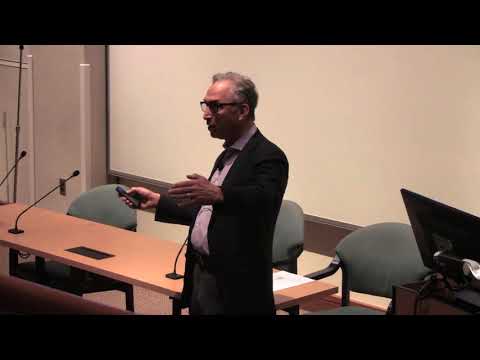

 For more infomation >> Multiple Farms Design Part 2 : How to make melon & pumpkin farm - Duration: 1:08.
 For more infomation >> How I Went From Being Unemployed And Broke To Making It Big | HTC Testimonial - Duration: 5:18.
  For more infomation >> How To Become an Influencer By Being The BIG Fish in the small Pond - Duration: 3:13.
  For more infomation >> How to FIND new VIDEO CLIENTS | Step 2 - Considering the Location you are in - Duration: 3:16.




 For more infomation >> Beetroot Halwa Recipe | How To Make Beetroot Halwa | Beetroot Pudding | चुकंदर का हलवा - Duration: 2:46.


Không có nhận xét nào:
Đăng nhận xét