Question: Which country would you say is the US's biggest ally?
Is it Canada?
Maybe the UK?
And what about Israel?
It is not an easy question to answer and it definitely depends on who you ask…
However, there is a country which has improved its alliance with the US a great deal in the
last few years.
It has improved enough that it is, for Republicans, the best friend of the country, its biggest
ally, more so than any other country.
And no, it is not Canada or the UK, it is Australia.
The country of surf, kangaroos and the Sydney Opera House.
Surprised?
Well, you shouldn´t be...
Australia is, dear viewer, the only country in the world to have fought with the US in
all their big wars:
WWI, WWII, Korea, Vietnam, the Gulf War, Afghanistan, Iraq and, also know, in the operations against
ISIS.
For the Pentagon, we could almost say Australia is to the USA what the score is to a movie.
It at first, might go unnoticed, but remove that music, and you can see that it's really
something that is missed.
On the 28th January 2017, and despite this old alliance, Donald Trump decided to hang
up the phone on Malcolm Turnbull, Australia´s Primer Minister.
Not just that, before he told him to get lost and hung up on him, Trump accused him of trying
to export terrorists to the United States!
And this was all about a slight disagreement that these two countries had over 1250 refugees...
but, you know, that's a story we're going to get to another day…
Yes, brief diplomatic tussle might not seem like that much in the grand scheme of things,
but it has had a lot of consequences.
Many Australians are left wondering if it isn't time to start to cooling off the relationship
with the US just a little.
So, well, this is something we started wondering as well…
It raises questions like: How important is Australia for the United States?
And was it really sensible for Trump to hang up the phone on his greatest ally?
And what kind of consequences is this going to have for him?
Well, let's take a look shall we?
TIME FOR ASIA
It's probably not news to you...
especially if you have been following this channel for a while: The world has changed
and both the political and economic power centres are moving quickly to Asia.
By 2020 it is expected that more than half of the world's economy and population will
be located in this continent.
And China is emerging as a new superpower.
And that's a fact.
Up until now, a map of the world has looked pretty close to this one...
Well, from now on we're going to see something closer and closer to this one.
As you can see Europe is leaving the centre of the world, and is taking up a position
in the corner.
Now this is just a fun comparison, but we really can't deny that the world is changing.
The 21st Century is going to be Asia's century...
Something we've discuss a bunch here at VisualPolitik.
That is why former US president Barack Obama decided to bet strongly on Asia and made this
continent his top priority for American diplomacy.
It was under these circumstances that Australia
become such a valuable friend.
But… how close is this friendship between the US and Australia really?
Well, let's take a look.
A BIG ALLIANCE
In November 2011, Barack Obama and Australia's Prime Minister at the time, Julia Gillard,
signed a military agreement which meant a new era for military cooperation between these
two countries.
We could almost say that this new treaty started a military friendship between the US and Australia.
In fact, let's take a look at the description the New York Times wrote about the agreement:
"The agreement with Australia amounts to the first long-term expansion of the American
military's presence in the Pacific since the end of the Vietnam War".
New York Times.
http://www.nytimes.com/2011/11/17/world/asia/obama-and-gillard-expand-us-australia-military-ties.html
But…what did this agreement really mean?
Well, for starters, thanks to the treaty, the US can deploy a fighting force of up to
2,500 soldiers of the in Australia…
These troops are from the Marine Corps and they are able to quickly deploy in the event
of any conflict.
But don´t think this is the end of things…
Since then, the collaboration between these countries has grown and grown... it has grown
enough to become an essential relationship for Washington.
It's not just the Marines, the United States wants to make Australia the key home base
for their activities in both the Pacific and Indian Ocean.
So now you are probably getting the idea - the US want to have access to the landing strips
situated in the north of the country, and they want to display bombers B-2 and B-52
bombers from Australian soil.
They also want to set up a large naval base near Perth for their enormous fleet of nuclear
aircraft carriers and nuclear submarines.
And there is more… the United States is also trying to locate air monitoring centres
and missile launch warning facilities there too.
They even want to rent part of the Coco Islands in the Indian Ocean which are under Australian
sovereignty.
So, you might now be thinking?
What do you mean?
Why would the United States want to rent some remote islands in the Indian Ocean?
Well, the answer is clear: the US wants to locate their long-range surveillance aircrafts
and armed drones on the Coco Islands...
They also want to use this archipelago as another deployment centre for their bombers
in case of war.
But wait, because there is still more...
The United States wants to improve the integration between their army and the Australian military,
so that the two forces could work together whenever needed.
Now, if you don't exactly understand what the results of that could be, well consider
this…
In the last few years, Australia has carried out a significant renovation of their military
equipment.
We are talking about purchase contracts worth billions and billions of dollars and, among
those, there is quite a lot of American material.
Take the controversial F35 as an example: Australia has committed to buy 72 units…
which is going to cost $19 billion.
That is a serious amount of cash…
And we are talking about a country of little more than 24 million inhabitants.
So per person, it's really a lot of money…
Alright, so now you've got to be wondering, "Why Australia?"
Right?
Well, for several reasons:
First, because both countries are culturally similar and, as we said before, they have
fought together many times.
Second, because Australia's geographical position is almost perfect: it's situated
between the Indian and Pacific oceans, and it is close enough to the "hot spots"
in Asia that the US could carry out attacks and deploy troops there quickly.
And, last but not least, another crucial factor:
Australia is an important energy, raw material and food supplier to China.
So the Pentagon's believes that, in the event of a conflict or tough tensions between
the two countries, it would be convenient to have control over Australia.
And, well, what about the other side?
What do the Australians want?
They basically understand that the US can be a sort of insurance policy... a way to
ensure their own security.
However, there are some voices who disagree, and these voices seem to be growing louder.
And further, Trump hasn't helped with his whole hanging up the phone situation…
THE CHINESE ALTERNATIVE
China is, by far, the largest trade partner for Australia: it is the first destination
for Australia's exports, the country of origin for many of the immigrants coming to
Australia and, besides, there are more and more Chinese people who visit the country
every year, or who have decided to study there.
Anyway, the Chinese mean a lot of money for the Australians, and that has it's consequences.
"A 2016 survey conducted by the public policy group Lowy Institute asked respondents to
identify the country that was more important to Australia; 43 percent chose the United
States, and 43 percent China.
In 2014, 48 percent had answered the United States, and only 37 percent had chosen China".
New York Times https://www.nytimes.com/2017/02/02/world/australia/donald-trump-malcolm-turnbull-refugees.html
And, look, under 45 year-olds clearly opted for China and almost half of the country's
population believe their country should keep some distance from a Trump's America.
Paul Keating, an important Australian ex-prime minister, for example, is one of the personalities
who thinks it would be better to try to improve relations with China, and let relations with
the United States cool down a bit.
And pay particular attention to how he explains his position...
"This society of ours is a better society than the United States.
It's more even, it's more fair.
We've had a 50 percent increase in real incomes in the last 20 years.
Median America has had zero, zero."
Paul Keating
https://www.nytimes.com/2016/12/16/opinion/dear-america-why-did-you-let-us-down.html
For now, Australia has made some kind gestures towards the Asian giant:
As an example (and by the way Washington didn't like this at all) the country decided to participate
in the Asian Infrastructure Investment Bank, an institution lead by China whose aim is
to increase China's influence in the country.
The Australian government itself has made it clear that China is, above all, a source
for opportunities for the country.
Luckily for Trump, there are still many bonds protecting the alliance he has with Australia.
AMERICAN CULTURE AND FEAR OF THE CHINESE DRAGON
Australia and the US are politically, culturally and economically similar countries.
They are so similar that, at an international level, that it could be argued that Australia
is nothing more than an extension of the American lifestyle in Asia.
And the truth is, Australians are still very proud to be considered that way.
"Whatever happens, it will not dull my affection for the American people and the best of American
culture.
I was not raised in America, but I was raised in the American century.
I am not yet ready to say goodbye".
Lisa Pryor.
Furthermore, the United States is still the largest investor in Australia, an investment
that exceeds $500 billion.
Also, the fact that China is still a dictatorship is making Australia suspicious, many simply
don't trust Beijing's intentions.
In fact, the government has stopped many Chinese investment operations that intended to buy
land in Australia.
So, we can say that it all indicates the alliance with the US will continue, but…
Australians are very practical people, and they have made it clear they don't want
to be affected by a future hypothetical war of power between China and the United States.
So, that's what we think here at Visual Politik, now we'd like to know: what do
you think?
Do you think the United States will (despite Trump) carry out all the projects they had
planned in Australia?
Or do you think China achieve more and more influence?
And, most importantly, how would you feel if Trump had hung up the phone on your country's
leader!?
If you enjoyed our video, please hit like, and do click the 'subscribe' button to stay
tuned for our new videos twice a week!
Also, check out our friends at the Reconsider Media Podcast - they provided the vocals in
this episode that were not mine!
And as always, thanks for watching!
 For more infomation >> Rollover causing backup on US-95 near Spaghetti Bowl - Duration: 0:56.

 For more infomation >> Report reveals underground US haven for heroin, drug users - Duration: 1:07.
 For more infomation >> Fake Taxi - Australia || Health for all of us - Duration: 0:56.
  For more infomation >> US law enforcement secrets were up for sale by Honeywell employee - Duration: 2:01.
  For more infomation >> Lego:Brickmania US ARMY JEEP - Duration: 5:51.


 For more infomation >> RAINBOW SIX SIEGE THE NEW OPERATORS ARE AMONGST US...SOON -RAINBOW SIX PLAYING WITH THE STUGES - Duration: 1:22:54.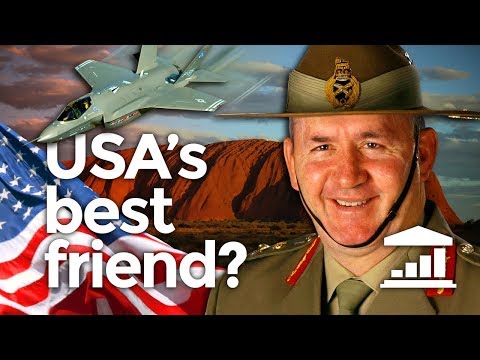

 For more infomation >> North Korea says US allies will be targeted. - Duration: 4:54.

Không có nhận xét nào:
Đăng nhận xét